Aug 17, 2026Quality Inspection Guides
During Production Check vs Final Random Inspection: Which One Do You Need?
Understand the difference between During Production Check (DPC) and Final Random Inspection (FRI), when to use each inspection stage, and how they help reduce quality risks when sourcing from China.
During Production Check (DPC) vs Final Random Inspection (FRI): What Is the Difference?
Your supplier has started production. You now need to decide whether to check the goods while work is still under way or wait until the shipment is finished.
That timing changes the value of the information you receive. A During Production Check shows whether bulk production is moving in the right direction while correction is still practical. A Final Random Inspection shows the condition of completed goods before shipment.
DPC and FRI are not competing choices. They answer different questions, and the right one depends on when you need independent information.
The Main Difference Between DPC and FRI
| During Production Check (DPC) | Final Random Inspection (FRI) |
|---|---|---|
Timing | While production is running | After production is completed |
Main question | Is production moving in the right direction? | Are the finished goods ready for shipment? |
Main focus | Progress, early output, and open production risks | Finished product and packing condition |
Correction opportunity | Usually higher | Usually more limited |
Typical use | New, complex, large, or difficult-to-rework orders | Shipment verification before release |
DPC provides an early view of goods and processes that are still changing. FRI provides a later view of the actual shipment when the order is sufficiently complete for random sampling.
Both are point-in-time checks. The first looks forward to what can still be corrected; the second supports the decision on what is ready to ship.
What Happens During a During Production Check?
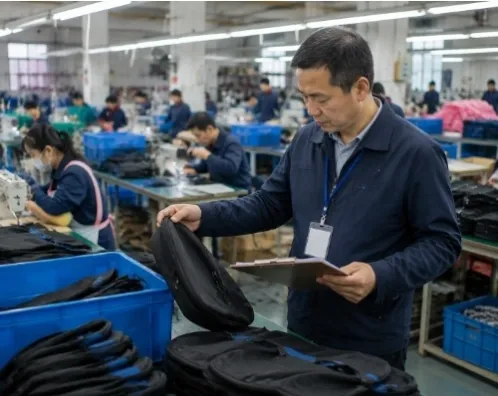
A During Production Check (DPC) starts by confirming actual production progress: how many units are completed, what quantity is in process, which models or colors are running, and whether any part of the order has not yet started.
The inspector selects available bulk-production pieces and compares them with the confirmed requirements. Depending on the product and the agreed scope, this may include materials, components, measurements, workmanship, assembly, printing, function, and the first completed packaging.
Partially finished goods and the active process can reveal issues that finished samples alone may not explain. For example, the inspector may see panels cut to the wrong measurement, printing consistently positioned off center, or a component installed in the wrong direction before the remaining units reach the same stage.
DPC is not final acceptance of the order. The goods checked represent the production available that day, and more units will be made afterward. Its purpose is to identify an open risk early enough for the factory and customer to review corrective action.
When DPC Provides the Most Useful Information
DPC is valuable when rework becomes harder or more expensive after production is complete. This includes customized goods, products with several manufacturing stages, large orders, and items that will be sealed, assembled, coated, printed, or packed in a way that hides earlier work.
A first order with a supplier is another common reason. The first bulk pieces show how approved requirements have been transferred from sales and development to the production team. This is more informative than waiting for every unit to repeat the same interpretation.
The visit should be timed around a meaningful production point, not only a calendar date or percentage. The relevant materials and critical process must be running, and enough bulk pieces must be available to inspect. Arriving too early may show preparation rather than production.
A wrong fabric, print color, assembly method, or carton marking found at this stage can often be corrected before it affects the full quantity. The same issue found after all goods are completed may require sorting, disassembly, or remaking.
For a broader view of why production visibility matters when you are overseas, see What Happens Inside a Factory When You Are Not There?.
What Happens During a Final Random Inspection?
A Final Random Inspection (FRI) is carried out when production is completed and the goods are packed or sufficiently ready for representative sampling.
The inspector first confirms the available quantity and packing status, then selects samples from different cartons according to the agreed sampling plan. The selected goods are checked for appearance, workmanship, measurements, function, labels, accessories, quantity, and packaging as required for the product.
Defects are recorded with descriptions, quantities, locations, photos, and classifications. The counts are compared with the agreed acceptance and rejection limits. If you want to understand how the sample quantity is selected, see the AQL Sampling Plan article.
The resulting report brings together production status, sampling details, checks performed, findings, and the final result. How to Read a Pre-Shipment Inspection Report: A Practical Guide explains how to interpret those sections before making a shipment decision.
When FRI Is the More Relevant Check
FRI is the relevant choice when your question concerns the finished shipment. It provides evidence after the order has taken its final form, including the retail packing, labels, accessories, and carton configuration that will reach your customer.
It is commonly arranged before shipment and, when purchasing terms allow, before final payment. The date should still leave time to review the report and request correction if necessary.
FRI is especially useful for a first shipment, customer-sensitive products, customized orders, or goods with strict appearance, measurement, function, and packaging requirements.
Clear preparation determines what can be verified on the day. How to Prepare for a Pre-Shipment Inspection: A Practical Guide for Buyers lists the order information and approved requirements to provide before the visit.
Why DPC Cannot Replace FRI
DPC checks goods while production is still changing. Later units may be produced by another line or shift, materials may come from another batch, and packing may not yet be available for review.
Even when the first bulk pieces meet the requirements, the completed shipment still needs its own verification if your release decision depends on final quantity, product consistency, labels, accessories, or packaging.
Why FRI Cannot Replace an Earlier Check
FRI can identify problems in finished goods, but it cannot return the order to an earlier production stage. If the defect comes from material, cutting, printing, molding, or assembly, the full quantity may already be affected by the time it is found.
Correction may still be possible, but it can require more labor, replacement material, a new production slot, or a delayed shipment. When a known risk is easier to control during production, waiting for FRI gives you the information later than you need it.
Using DPC and FRI Together
For a higher-risk order, DPC and FRI can provide visibility at two different decision points. DPC checks whether early bulk production is following the confirmed direction. FRI checks the completed shipment after corrective work and remaining production are finished.
This does not mean every order requires both. Product complexity, supplier history, order value, available correction time, and the consequence of receiving unacceptable goods should determine the inspection plan.
If you are still deciding whether the supplier itself or the goods need to be evaluated, Factory Audit vs Product Inspection: Which One Do You Need? separates those two questions.
Factory QC remains part of production control, while independent checks provide information against your confirmed requirements. Why Supplier QC Is Not the Same as Buyer-Side Inspection explains how those roles work alongside each other.
Choose the Timing by the Question You Need Answered
- You need to know whether production can still be corrected before the same issue affects the remaining quantity. Choose DPC.
- You need to know whether completed and packed goods are acceptable before shipment. Choose FRI.
- The order has both a known production risk and an important shipment-release decision. Consider DPC followed by FRI.
The service name is less important than the timing of the information. Select the stage that gives you enough time and evidence to make the next decision.
How GD Inspection Supports Different Production Stages
GD Inspection conducts factory audits, during-production checks, and final random inspections in China. A factory audit provides information about the proposed supplier, DPC provides information while production is running, and FRI provides information about finished goods before shipment.
The right service depends on the question you need to answer and when the answer can still affect your decision. The purpose is independent visibility, not replacing your supplier's production management or your commercial judgment.
Frequently Asked Questions
Is DPC the same as FRI?
No. DPC checks production while work is still under way. FRI checks randomly selected finished goods when the shipment is sufficiently complete. They use different timing to answer different questions.
When should I arrange a During Production Check?
Arrange DPC when critical processes are running and enough bulk-production pieces are available to evaluate the known risks. The exact timing depends on the product process, not one fixed completion percentage.
Can DPC prevent all quality problems?
No. DPC can identify issues in the production available on the visit date, but later production and final packing may introduce other problems. It reduces risk by creating an earlier correction point.
Do I still need FRI after DPC?
Arrange FRI if your shipment decision requires verification of the completed goods. DPC cannot confirm later batches, final quantity, or finished packing that was not available during the earlier visit.
Which inspection should I choose for my first order?
Choose DPC when the product is customized, complex, difficult to rework, or likely to benefit from early correction. Choose FRI when the main need is shipment verification. For a first order with both types of risk, using both may be reasonable.
Before You Decide When to Inspect
The best inspection timing depends on the question you need answered.
DPC helps you see production problems while there is still time to react. FRI helps you verify finished goods before shipment.
Both reduce uncertainty, but only when they are arranged at the stage where their findings can still support a real decision.