Jul 29, 2026Importing Tips & Best Practices
What Happens Inside a Factory When You Are Not There?
Learn what overseas buyers cannot always see during production in China and how independent quality control helps verify production status, workmanship, and shipment readiness.
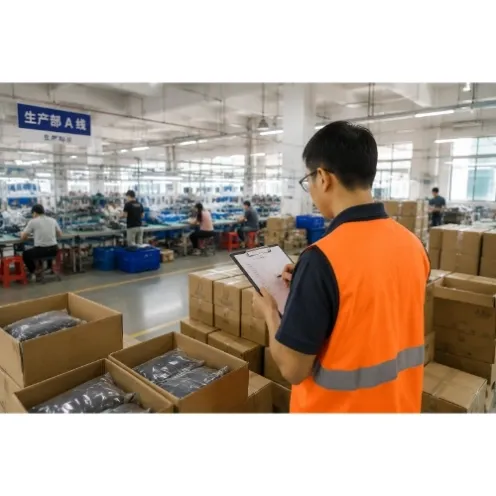
You approved the sample. You confirmed the price. The factory started production. But one question remains: what is actually happening inside the factory when you are thousands of miles away?
This is one of the most common uncertainties when sourcing from China. The challenge is not always finding a supplier. The harder part is knowing whether your production is moving in the right direction after the order is placed.
You may receive photos, videos, production updates, and shipping schedules. These are useful, but they do not always show whether the factory is following your approved requirements, whether the workmanship is stable, or whether problems are being found early enough to correct.
The Challenge of Managing Production From Overseas
When you are not physically at the factory, you depend on information sent by other people. That information may be accurate, but it is still limited.
You may not know whether production has really started, whether all materials have arrived, whether the first finished pieces match the approved sample, or whether the factory is already seeing defects on the production line.
This does not mean your supplier is hiding something. In many cases, the issue is simply distance. Sales staff, production workers, packing teams, and factory QC may all see different parts of the order. What reaches you overseas is usually a short update, not the full production picture.
From our experience, many quality problems become easier to solve when they are seen early. The difficulty is that overseas buyers often see the problem only after production is finished, when there is less time to correct it.
A Factory May Look Different During Sample Development and Mass Production
Sample development is usually slower and more controlled. A few pieces are made, comments are adjusted, and the factory may give extra attention to the details because the sample needs your approval.
Mass production is different. More workers are involved. Materials and trims are handled in larger quantities. Cutting, sewing, assembly, finishing, and packing may be divided between different teams. The factory is also working under delivery pressure.
This is where small differences can appear. Measurements may drift slightly. Stitching may become less consistent. Assembly may feel looser than the sample. Packaging may be handled differently from what was confirmed earlier.
If you want to understand this specific risk in more detail, you can read How to Make Sure Bulk Production Matches the Approved Sample.
What You Cannot See From Photos and Videos
Factory photos and videos can confirm that something is happening, but they cannot always confirm the full condition of your order.
A photo may show finished goods on a table, but not whether those goods were randomly selected. A video may show one product working, but not whether the same result appears across different cartons. A picture of packed goods may show the carton marks, but not whether the inner packing, accessories, and labels are correct.
Some problems are difficult to judge from photos. Color shading between garments, weak stitching inside a bag, poor fitting of assembled parts, missing accessories, carton mixing, and hidden workmanship issues usually need physical checking.
Photos are useful for communication. They are not always enough for verification.
What an Independent Inspector Can See at the Factory
During a factory visit, an independent inspector can look at the order from a different position. The purpose is not to find fault with the supplier. The purpose is to give you a clear view of what is actually happening.
An inspector can check whether production is complete enough for inspection, whether finished goods are packed, whether the quantity matches the order, and whether cartons are available for random sampling.
The inspector can also check workmanship, measurements, function, packaging, labeling, and product consistency against your approved requirements. If your product has special points, those can be added to the inspection instructions before the visit.
A practical factory visit often reveals details that are not visible in factory updates. For example, finished goods may be packed in more than one area, different cartons may contain different production batches, or the factory may still be reworking part of the order while preparing for shipment.
Where Quality Risks Appear During Production
Before production starts, the main risk is unclear requirements. If the factory does not receive confirmed specifications, approved samples, artwork, dimensions, materials, labels, and packing details, the production team may make reasonable assumptions that do not match your expectations.
During production, the main risk is consistency. The first pieces may be acceptable, but later pieces may show changes in workmanship, measurements, assembly tightness, printing position, or packing method. This is especially common when production is spread across several workers or lines.
Before shipment, the main risk is that finished goods are already packed and the delivery schedule is tight. At this stage, defects can still be found, but correction may require sorting, rework, replacement, or delayed shipment.
This is why different checks are useful at different stages. A During Production Check (DPC) Service helps you see problems while production is still moving. A Final Random Inspection (FRI) Service helps verify finished goods before shipment.
Why Independent Checks Create Confidence
Independent quality control is not about replacing supplier trust. It is about verifying the parts of the order you cannot see yourself.
A good supplier relationship still needs clear requirements and honest communication. Independent checks add another layer of visibility. They help answer practical questions: Is the factory producing what we agreed? Are the finished goods consistent? Are there problems that should be handled before shipment?
For overseas buyers, this information matters because decisions are often made before final payment, container loading, or release of shipping documents. If you only discover the issue after delivery, your options become much more limited.
The earlier you know the real condition of your production, the more choices you have.
How GD Inspection Helps You Stay Connected With Your Production
GD Inspection helps overseas customers understand what is happening inside factories through independent on-site checks in China.
A Factory Audit Service can help you understand a supplier’s basic capability before cooperation or before placing larger orders. During production, DPC can show whether the order is following the approved requirements while there is still time to adjust. Before shipment, FRI helps verify the finished goods by random sampling.
If samples need to be selected from actual production for review or testing, Sample Picking Service can help maintain traceability. This is useful when you do not want to rely only on samples chosen and sent by the factory.
The role of these checks is simple: to give you clearer information before you make the next decision.
Before the Goods Leave China
When you source from another country, you cannot always be physically present at the factory. But you can still reduce the information gap.
Reliable information before shipment helps you decide whether to release payment, ask for correction, arrange further checking, or hold the goods until the issue is clear.
Quality control is not only about finding defects. It is about knowing what is happening before the goods leave China.