Aug 14, 2026Importing Tips & Best Practices
How to Avoid Quality Problems When Starting Mass Production With a New Supplier
Practical advice for importers sourcing from China on how to reduce quality risks during the first mass production order with a new supplier.
How to Avoid Quality Problems When Starting Mass Production With a New Supplier
Working with a new supplier always involves uncertainty. Even if the supplier provides good samples and promises stable production, the first mass production order is when many quality risks appear.
A sample shows what the supplier can make under controlled conditions. The first bulk order shows how the supplier manages workers, materials, production instructions, packing, internal checking, and delivery pressure. For importers, this is the stage where control needs to become more practical.
The goal is not to distrust the supplier. The goal is to make sure both sides are working from the same requirements before the goods are finished and packed.
Understand What Can Go Wrong Before Production Starts
Many first-order problems begin before production actually starts.
The buyer may have confirmed the product in emails, photos, or chat messages, but the factory production team may not receive the same level of detail. The salesperson may understand the buyer’s comments, while the production line follows a simpler internal instruction.
This is common when a product has several revisions. A buyer may approve the final sample after small changes, but the factory may still keep old notes, old packing instructions, or an earlier material reference in circulation.
Supplier assumptions also create risk. A factory may think a small change in packing, stitching, label position, color shade, accessory placement, or carton arrangement is acceptable because it does not affect basic function. The buyer may see the same change as a quality or brand issue.
From GD Inspection’s experience, new supplier problems are often not caused by one big technical failure. They are usually caused by unclear details that were not controlled before mass production started.
Confirm the Production Requirements Clearly
A new supplier cannot control requirements that were never clearly confirmed.
Before production starts, the buyer should make sure the factory has the final approved sample, written specifications, packing requirements, artwork, labels, accessories, and any critical quality points. These should be final versions, not mixed files from different development stages.
The approved sample is important, but it should not be the only reference. A physical sample helps the factory understand the product, but written requirements help the production team control repeatable details.
For example, if size tolerance matters, it should be written. If the logo position must match a layout, the measurement should be clear. If the product must pass a pull test, leakage check, waterproof test, 3M tape check, or other function check, the requirement should be confirmed before production.
This is especially important for customized products. The more customized the product is, the less the factory can rely on its usual production habit.
Identify the Points That Cannot Drift
Not every detail has the same risk.
Before production, the buyer should identify the points that would make the goods difficult to sell or use if they are wrong. For garments, this may be measurements, fabric shade, stitching strength, trim position, and packing presentation. For bags, it may be strap attachment, zipper function, logo position, inner structure, and accessory count. For hard goods, it may be assembly, surface finish, fitting, function, and packaging.
The list should be short enough for the factory to use.
If everything is described as critical, nothing is controlled well. A practical specification tells the factory what must be checked carefully during production and what can be handled within normal tolerance.
This also helps later inspection. QC can compare finished goods with the approved requirements instead of relying on general impressions.
Check Production Before the Full Order Is Completed
The first finished pieces are worth checking.
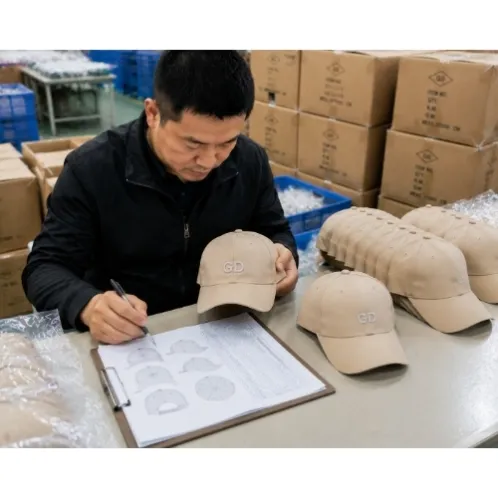
Once the factory starts mass production, the buyer should confirm whether the early production pieces match the approved sample and written requirements. This can be done through factory photos, buyer review, or During Production Inspection when the risk is higher.
The timing matters. If a problem is found when only part of the order is finished, the factory can still adjust the process. If the same problem is found after all goods are packed, the buyer may be left with sorting, rework, or shipment delay.
During early checking, the focus should be on the points most likely to drift: measurements, workmanship, color, construction, function, labels, and packing. The purpose is not to inspect the whole order at this stage. The purpose is to confirm that mass production is moving in the right direction.
For a new supplier, this early check often reveals how well the factory understood the buyer’s requirements.
Do Not Rely Only on the Factory’s Internal QC
Factory QC and buyer-side verification have different roles.
Factory QC is part of the supplier’s production control. It helps the factory catch problems, reduce rework, and keep production moving. A good factory should have internal checks.
Independent verification looks at the shipment from the buyer’s side. It checks whether the finished goods match the buyer’s requirements, approved sample, purchase order, and packing expectations.
These two roles are not the same.
A factory may accept a detail because it falls within its usual production standard. The buyer may reject the same detail because it does not match the approved sample or market requirement. This is why third-party inspection is useful, especially for a first order with a new supplier.
The point is not that the factory QC is unreliable. The point is that internal QC and buyer-side inspection answer different questions.
Verify the Goods Before Shipment
Pre-Shipment Inspection is often the last practical opportunity to check the first order before it leaves China.
At this stage, QC selects samples from finished cartons and checks whether the goods match the approved requirements. The inspection should focus on the real risks of the product: appearance, workmanship, measurements, function, labeling, accessories, packing, and consistency across the shipment.
For a new supplier, consistency matters.
One sample may be acceptable, but the shipment may include different production days, workers, sizes, colors, or carton ranges. QC should select samples from different cartons so the buyer can see whether the standard is stable across the order.
If a key performance point cannot be confirmed by appearance, samples can be selected for additional testing. GD Inspection can help with Sample Picking Service or witness sampling, while formal lab results should come from a qualified testing party.
What Importers Should Do When Working With a New Supplier
Before production, confirm the final approved sample, written specifications, packaging requirements, labels, accessories, and critical quality points.
During production, check the first finished pieces and confirm that the factory has understood the requirements before the full order is completed.
Before shipment, arrange buyer-side verification through random sampling and comparison with the approved requirements.
For a new supplier, the first order should not be treated as routine. It is the order that proves whether the supplier can repeat the approved standard in real production.
The earlier uncertainty is reduced, the more control the importer has before the goods leave China.