Aug 3, 2026Importing Tips & Best Practices
Why Supplier QC Is Not the Same as Buyer-Side Inspection
Understand the difference between factory internal QC and buyer-side inspection, and why independent verification helps you make better shipment decisions when sourcing from China.
Your supplier tells you: “Don’t worry, we have our own QC team.”
That sounds reassuring. A good factory should have internal quality control. Without it, production becomes difficult to manage, defects increase, and rework becomes expensive.
But one question still matters before shipment: is the factory checking the same things you care about?
Factory QC mainly protects the production process. Buyer-side inspection helps verify whether the shipment meets your approved requirements.
A Factory QC Team Has an Important Role
A factory’s internal QC team is part of daily production management. Their work helps the factory control worker operations, reduce defects, keep production moving, and avoid unnecessary rework.
For example, factory QC may check whether workers follow the correct process, whether semi-finished goods are moving properly between production steps, and whether obvious defects are being corrected before the next stage.
This is important work. A supplier with no internal QC system is usually harder to control, especially when the order quantity is large or the product has many details.
The point is not that factory QC has no value. The point is that factory QC is mainly built around the factory’s production needs.
Factory QC and Buyer-Side Inspection Have Different Priorities
Factory QC usually asks: can we produce this product correctly and efficiently?
Buyer-side inspection asks a different question: does this shipment meet the requirements you approved?
Those two questions may overlap, but they are not identical. The factory may focus on production flow, defect reduction, delivery schedule, and whether the goods can move to packing. You may care more about the approved sample, measurements, packaging, labeling, carton marks, accessories, and customer expectations.
A factory may consider a small variation acceptable because it does not stop production. Your customer may see the same variation as a quality problem.
This is why your inspection requirements should be clear before the visit. If a certain label, measurement, color range, accessory, or packing method matters to your shipment, it should be checked from your side, not assumed.
The Information Gap Between Factory and Buyer
When you are not at the factory, you usually receive only selected information.
You may get production photos, short videos, packing updates, or a message saying the goods passed factory QC. These updates can be useful, but they rarely show the full checking process.
You may not know which cartons were opened, whether samples were chosen randomly, whether all production batches were included, or whether earlier defects were corrected before the final goods were packed.
This is not always a trust issue. In many cases, it is a visibility issue. The factory sees the order every day. You see only the information that is sent to you.
If you want to understand this information gap more clearly, you can read What Happens Inside a Factory When You Are Not There?.
Why an Internal QC Report May Not Answer Every Buyer Question
A factory QC report can be useful, especially when the supplier has a stable quality system. It may show that the factory checked production internally and recorded certain results.
But your shipment decision may require different information.
A factory report may say “Production passed.” You may still need to know whether the correct approved sample was used as reference, whether random cartons were selected, whether measurements were verified, whether packaging matched your instructions, and whether defects were classified according to the agreed standard.
A factory QC report may also focus on production defects the factory normally controls. Your special requirements may not be included unless they were clearly communicated and checked.
For example, if your customer requires a specific barcode position, warning label, accessory set, or carton packing method, the factory’s standard QC checklist may not cover it in the same way your inspection report should.
What Buyer-Side Inspection Adds
Buyer-side inspection gives you an independent view of the shipment.
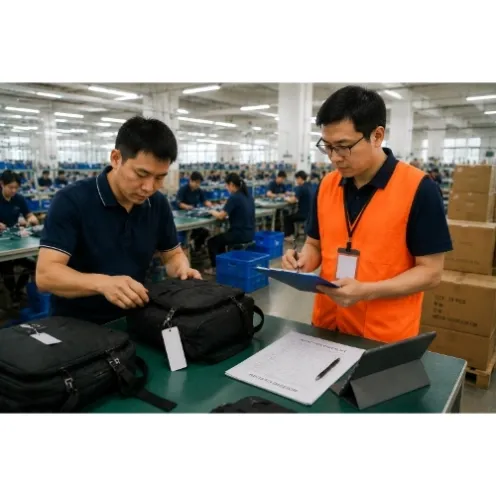
During a factory visit, an inspector can select samples from finished goods, check them against your approved requirements, record defects with photos, verify packaging and labeling, and report whether the shipment meets the agreed criteria.
Random sampling is important here. If only the best pieces or most convenient cartons are checked, the result may not represent the shipment. Buyer-side inspection helps reduce this risk by selecting samples from actual packed goods according to the inspection plan.
The purpose is not to find fault with your supplier. The purpose is to answer a practical question before shipment: are the goods ready based on your requirements?
If your decision depends on finished goods verification, you can arrange a Final Random Inspection (FRI) Service before the goods leave China.
When Independent Inspection Is Especially Valuable
Independent inspection is especially useful when you do not yet have enough production history with your supplier.
For a first order, you may not know how stable the factory’s workmanship is, whether packing is controlled well, or whether quality is consistent across cartons. Factory QC may be working, but you still need your own verification before final payment or shipment release.
For new product development, details may change between sample approval and mass production. Small differences in materials, measurements, assembly, printing, or packing can appear once the product moves from sample room to production line.
Customized products also need closer attention because more requirements create more chances for misunderstanding. A standard factory checklist may not include your customer’s special points.
High-value or customer-sensitive products carry higher risk after shipment. If one defect creates a costly return, complaint, or rejected delivery, independent verification before shipment becomes more important.
Supplier QC and Third-Party Inspection Can Work Together
The best quality system is not factory QC or third-party inspection alone.
Factory QC controls production every day. It helps prevent problems before they spread. Third-party inspection checks the result from your side and helps confirm whether the shipment matches what you approved.
These two roles should support each other. If factory QC finds and corrects problems during production, the final shipment is more likely to pass. If an independent inspection finds issues before shipment, you still have a chance to discuss rework, sorting, replacement, or further checking with your supplier.
A During Production Check (DPC) Service can be useful when you want visibility before the order is fully completed. It helps you see production status and quality risks while correction is still easier.
If you want to understand why factory updates alone may not be enough, you can also read Why Factory Photos Are Not Enough Before Shipment.
How GD Inspection Helps You Verify Your Shipment
GD Inspection helps you verify your shipment from the buyer’s side through independent on-site checks in China.
A Factory Audit Service can help you understand a supplier’s basic capability before placing larger orders. During production, DPC can show whether production is following your approved requirements. Before shipment, FRI helps verify finished goods through random sampling.
If samples need to be selected from actual production, Sample Picking Service can help maintain sample traceability. If product performance cannot be confirmed visually at the factory, Lab Testing Assistance Service can support sample submission to an independent laboratory.
The role is not to replace your supplier’s QC team. The role is to give you independent information before you make a shipment decision.
Before You Make the Shipping Decision
A supplier’s QC team is an important part of production. It helps the factory control process, reduce defects, and keep the order moving.
But when you are thousands of miles away, you still need visibility from your side.
The better question is not “Do I trust my supplier?” The better question is: do you have enough information to make the right decision before shipment?