Aug 15, 2026Quality Inspection Guides
7 Warning Signs Your New Supplier's Mass Production May Be Going Wrong
Learn 7 warning signs that may indicate quality or production problems when placing your first mass-production order with a new supplier in China.
New Supplier Mass Production: 7 Warning Signs You Should Watch
The approved sample looked good. You placed the order, production started, and the first updates were clear. Then the messages became less specific, the photos kept showing the same few units, the completion date moved slightly, and a material detail was described differently. Your supplier still said, 'Don't worry, everything will be ready.'
None of these changes automatically proves that the order has a serious problem. With a new supplier, however, a change in the quality of information is worth understanding before production reaches the final stage. Quality problems often do not suddenly appear on inspection day; there may be earlier signals in the production updates, timing, materials, packing, or inspection arrangements.
This article focuses on recognizing those signals. If you need a broader preventive plan covering requirements, production preparation, and control points for a first order, read How to Avoid Quality Problems When Starting Mass Production With a New Supplier.
Warning Sign 1: Production Updates Become Vague
A useful update gives you quantities and stages: 'Cutting is complete, assembly is approximately 60% finished, and packing will begin Thursday.' A vague update says only, 'Production is going well,' 'Almost finished,' or 'No problem.'
One brief message does not indicate a delay. The signal is a consistent change from specific reporting to answers that no longer show what has actually been completed. This may simply mean the salesperson has not collected current information from production, but it should prompt a clearer question.
Ask for the current production quantity, completed quantity, present production stage, expected packing date, and expected completion date. A weekly update at agreed milestones is often enough; the purpose is visibility, not excessive daily reporting.
Warning Sign 2: Production Photos Keep Showing the Same Few Units
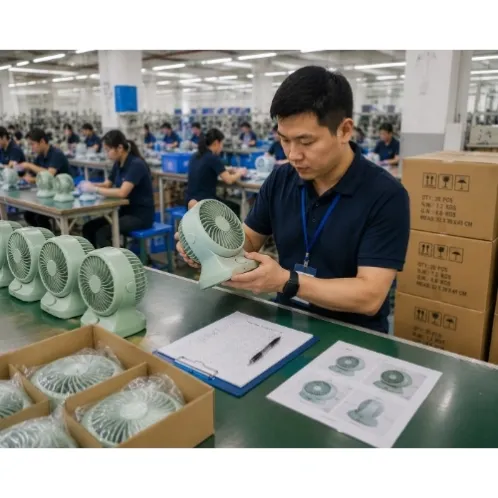
Photos can confirm that a product exists, but they may show very little about an order of several thousand units. If each update shows the same table, the same small group of finished products, or only close-up views, you still may not know how much production is complete.
This does not mean the supplier is deliberately selecting misleading images. Sales staff often photograph whatever is easiest to reach. The practical question is whether the photos help you understand the status of the whole order.
Where appropriate, request a wider production-area view, semi-finished goods at the current stage, finished quantity awaiting packing, the packing area, and cartons already completed. The images should be considered with quantities and dates, not as a substitute for them.
Distance creates an information gap because your supplier sees production every day while you see selected updates. What Happens Inside a Factory When You Are Not There? explains why independent on-site information can be useful at the stage where you need to make a decision.
Warning Sign 3: Materials or Components Are Described Differently
The approved requirement may specify one thickness, fabric composition, component, or packaging material. During production, the supplier may begin referring to an 'equivalent' component, a different thickness, another material description, or a revised packaging structure.
A change can be legitimate when both sides review and approve it. The warning sign is an unexplained or unapproved difference, especially when the new description appears only after production has started. First confirm whether the wording changed or the physical material actually changed.
Record the proposed change in writing, including the exact specification, reason, affected quantity, and effect on function, appearance, cost, or packaging. If composition or performance cannot be verified visually, ask for the appropriate documentation or independent testing rather than expecting an on-site inspector to identify chemical or material composition by sight.
Warning Sign 4: The Production Schedule Moves in Small Steps
On Monday, the supplier says production will finish Friday. On Friday, two more days are needed. On Monday, packing will finish Wednesday. On Wednesday, completion moves to the weekend. Each change sounds small, but the original date has now moved several times.
One delay does not necessarily indicate a quality problem. Material delivery, machine maintenance, worker availability, rework, and production scheduling can all affect timing. Repeated short extensions may indicate that the actual production status is different from the plan or that the remaining work was underestimated.
The quality risk appears when inspection and correction time are squeezed against the booked shipping date. Before arranging FRI, confirm how much of the order is complete, how much is packed, and whether the goods will be available for random selection on the agreed inspection day.
Warning Sign 5: Packing Starts While Known Quality Issues Are Still Open
Packing is useful progress only when the goods entering the cartons are acceptable. If an unresolved color difference, incorrect accessory, label problem, workmanship issue, or packaging change may affect many units, continued packing can make correction slower because the factory may need to reopen completed cartons.
This does not mean packing must stop for every minor question. The concern is a known material issue whose affected quantity and corrective action have not been agreed while the same goods continue moving into final packing.
Ask which production lots or SKUs may be affected, whether the issue has been contained, what criteria the packing team is using, and how the factory will identify cartons packed before and after correction. These details make later verification possible.
Warning Sign 6: The Supplier Becomes Reluctant to Arrange Inspection
An inspection date may change because the goods are not sufficiently complete, cartons are not ready, the production schedule has moved, or factory access needs coordination. A single change should be explained, not treated as proof that the supplier is hiding a problem.
Repeated date changes deserve clarification when the supplier cannot state when finished goods will be available, says independent inspection is unnecessary because factory QC already checked, or suggests inspecting after shipment. The issue is not reluctance itself; it is whether a valid pre-shipment inspection can still take place before the goods leave the factory.
Supplier QC vs Buyer-Side Inspection explains why factory quality control and independent verification have different roles. Inspection is easier to coordinate when it was included in the purchase arrangement and the supplier knows the expected readiness conditions in advance. How to Prepare for a Pre-Shipment Inspection lists the information that should be confirmed before the visit.
Warning Sign 7: Shipment Is Pushed Before Open Questions Are Closed
The vessel may be booked, the forwarder may be waiting, and missing the loading date may create a real delay. Shipping pressure is not unusual. It becomes a warning sign when an important product, correction, or inspection question remains unanswered and the schedule starts making the quality decision by default.
Before release, identify the open issue, whether the affected goods have been corrected, what evidence is available, and whether further verification is needed. The decision may still be to ship, but it should be made with a clear understanding of the remaining risk.
If a final inspection has already identified nonconforming findings, What Should You Do When a Pre-Shipment Inspection Fails? explains how to review the failure, supplier corrective action, and the need for re-inspection before deciding whether the goods can ship.
One Warning Sign Is Not Proof: Look for the Pattern
A delayed photo update does not mean production is bad. A changed inspection date does not prove that defects are being hidden. A small schedule delay does not mean the shipment will fail. Each event may have a reasonable explanation.
A pattern carries more information. Vague updates, repeated completion delays, inspection dates that keep moving, and pressure to ship immediately may together justify a closer look at actual production status. The purpose is not to become suspicious of every supplier; it is to recognize when the information available is no longer enough for the next decision.
What to Do When the Signals Start to Add Up
- Ask for specific quantities, stages, and dates rather than another general assurance.
- Compare the latest status with the agreed production schedule and current product requirements.
- Clarify any changed material, component, packaging, artwork, or specification in writing.
- Decide whether independent visibility is needed while production is still underway.
- If production is near completion, confirm readiness and arrange the appropriate final inspection before shipment where needed.
Keep the response proportional to the evidence. A single unclear message may need only a follow-up question. Several connected signals may justify on-site verification before more goods are completed or packed.
When a During Production Check Can Help
If the warning signs appear while production is still underway, a During Production Check (DPC) may provide independent information about the actual production stage, available semi-finished and finished goods, workmanship visible at that point, and whether production appears to follow the agreed requirements.
DPC does not guarantee that the remaining production will finish correctly. Its value is earlier visibility while there may still be more time to investigate, correct, or contain an issue before the whole order is packed.
When Final Random Inspection Becomes Important
When production is complete or sufficiently near completion under the agreed readiness conditions, a Final Random Inspection (FRI) can evaluate finished goods before shipment using the agreed scope and sampling plan.
FRI answers a finished-shipment question. It does not recreate the production history, so any material change, known quality concern, or unresolved issue should be shared before the visit and included in the inspection instructions where it can reasonably be checked.
A Practical Example: 5,000 Electric Kettles
A customer places a first order for 5,000 electric kettles with a new supplier. The approved production reference has been confirmed. In week one, the supplier reports molding, assembly, and finished quantities clearly.
In week two, the updates change to 'production is going well.' In week three, the photos again show only several finished kettles on the same table. The planned completion date moves twice. The supplier then says all goods will be packed tomorrow and asks for the balance payment.
None of those facts alone proves a quality problem. Together, they leave important questions unanswered: how many kettles are complete, whether the photos represent current production, whether packing is really starting across the full order, and whether finished goods will be available for inspection.
The customer asks for current quantities by production stage, wider production and packing views, and the confirmed inspection-readiness date. If production is still underway and the information remains unclear, a DPC may provide earlier visibility. If the order is genuinely near completion, FRI can verify selected finished kettles, packaging, and the agreed product checks before shipment.
The Goal Is Visibility, Not Distrust
Working with a new supplier creates an information gap. The factory sees production every day; you see emails, photos, videos, and schedules from thousands of miles away. Good quality management is not based on assuming that something is wrong. It is based on noticing when the available information no longer answers the decision in front of you.
The earlier you recognize that the information is becoming unclear, the more options you usually have before the goods are packed and shipped.
Frequently Asked Questions
Is a production delay always a warning sign?
No. Material delivery, machine issues, worker availability, rework, and scheduling can cause legitimate delays. Repeated extensions combined with unclear status information deserve closer review.
Should I worry if my supplier changes the inspection date?
Not necessarily. The goods may not yet meet the agreed readiness conditions. Ask what quantity is complete and packed, why the date changed, and when finished goods will actually be available. Repeated changes without specific information are more significant than one explained adjustment.
Are factory production photos reliable?
They are useful evidence of what appears in the frame, but they provide limited visibility into the whole order. Review them together with production quantities, stages, dates, and wider views where appropriate.
When should I arrange a During Production Check?
Consider it when production is underway and you need independent information about actual progress, available goods, workmanship, or whether production is following the agreed requirements before the order is finished.
Should every first order with a new supplier be inspected?
There is no universal answer. Consider the order value, product risk, supplier history, customer requirements, available quality evidence, and the consequences of receiving nonconforming goods. The control plan should match the actual risk and decision needs.