
Sep 5, 2026Quality Inspection Guides
E-Commerce Product Inspection: Why Products That Pass QC Still Get Bad Reviews
Learn why products can pass quality inspection but still receive bad e-commerce reviews, and what to check for packaging, appearance, accessories, labels, instructions, and customer-facing defects.
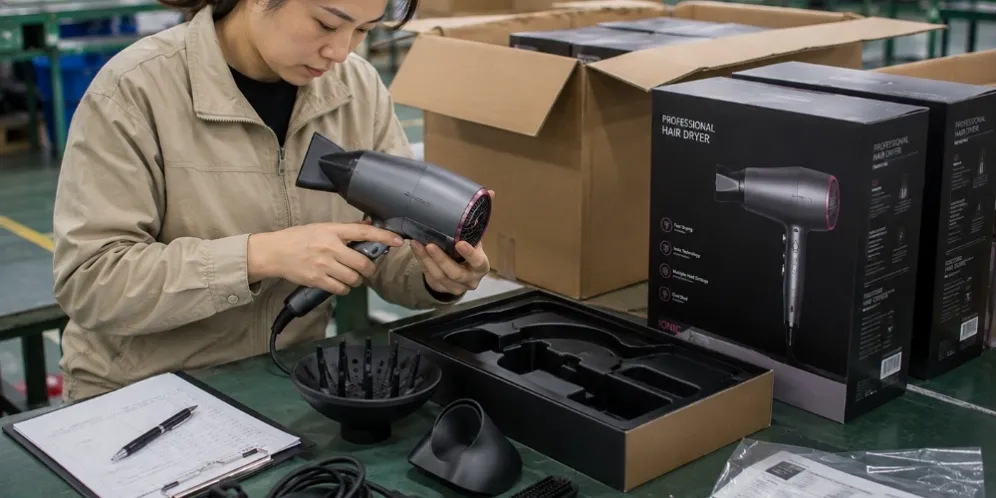
Why Products That Pass Inspection Can Still Get Bad E-Commerce Reviews
Your shipment passed inspection. The sampled hair dryers operated, the measurements were within tolerance, and the export cartons met the packing requirements. After customers began receiving the product, reviews mentioned a scratched housing, a missing attachment, a crushed retail box, and an incorrect color label.
Those reviews do not automatically mean the original inspection result was wrong. They may show that the agreed criteria focused on basic function and general shipment quality without giving enough attention to the details an individual online customer sees, opens, connects, scans, and compares with the listing.
For an online order, the inspection scope should reflect the complete unit delivered to the customer: the product, finish, accessories, labels, instructions, retail packaging, and consistency with the selected SKU. Inspection cannot prevent every return or bad review, but it can check the measurable issues that are known to affect the customer experience.
One Unit Becomes the Customer's Entire Experience
A distributor receiving hundreds of cartons can assess a shipment as a whole. An online customer normally sees one retail box and one unit. If that unit is missing an attachment or has a scratch across the front surface, the defect represents 100% of that customer's experience even if most of the shipment is acceptable.
Random sampling and AQL help evaluate shipment quality without opening every unit. They do not promise zero defects. If you want to understand how inspection quantity is selected, you can check How Many Pieces Are Inspected During a Quality Inspection?. For e-commerce products, the sampling method still needs a checklist that covers the issues most likely to be visible to the person receiving one unit.
A Hair Dryer Can Work and Still Disappoint the Customer
A basic function check may confirm that a selected hair dryer switches on, changes speed, produces warm air, and operates its controls. The customer can still be dissatisfied if the housing is scratched, the finish varies between the body and attachments, the diffuser is missing, or the product sits loosely inside a damaged retail box.
These details require specific actions during the factory visit. Selected units can be removed from their retail boxes, checked under suitable lighting, compared across cartons, matched against the accessory list, and repacked to see whether each component returns to its intended position. A general instruction to 'check the product' does not define those actions.
From our experience, the most useful e-commerce checks are often not complicated. They are clearly described comparisons: which surfaces must be free from visible marks, which attachments belong to each SKU, where each item should sit in the insert, and which packaging version should be used.
Retail Packaging Is Part of What the Customer Buys
For direct-to-consumer sales, the retail box may be the first branded item the customer sees. Creases, tears, dirt, poor printing, an old packaging version, or a product moving freely inside can create the impression that the item was previously opened or poorly handled.
Before shipment, selected retail boxes can be checked for visible condition, correct artwork version, seals, inserts, internal arrangement, and conformity with the agreed packing method. The inspector can also note whether the product or attachments move because the insert does not hold them securely.
This check has a clear limit. Acceptable retail packaging at the factory does not guarantee that no damage will occur during international transport, warehouse handling, or last-mile delivery. The report records the condition and packing method observed before shipment; it does not control every later handling stage.
Accessory Checks Need an Exact Reference
A finished product can operate correctly and still be returned immediately because one component is missing. For a hair dryer set, the expected contents might include the dryer, concentrator nozzle, diffuser, cleaning brush, manual, and storage pouch. The list may differ by model, so the SKU-to-accessory relationship must be clear.
Instead of writing only 'check accessories,' provide the quantity, description, version, and packing position for each item. During inspection, selected units can then be opened and counted against that reference. This also helps identify mixed packing, such as the correct dryer placed with the attachment set for another model.
Labels, Barcodes, and Instructions Connect the Product to the Order
A correct product with the wrong SKU label can enter the wrong inventory location or be sent to a customer who ordered another color or model. When label and barcode checks are included in the scope, the inspector can compare their presence, position, printed information, and scan result with the SKU matrix or files you provide.
Scanning confirms that the printed code can be read and allows comparison with the expected value. It does not verify the entire Amazon, retailer, or fulfillment database. The reference information must come from you, and the report should state what was compared.
Instructions affect the first use of products that require assembly, setup, charging, pairing, installation, or attachment connection. Where appropriate, the inspector can verify that the correct manual is present, compare its language or version with your requirement, fit the supplied attachments, and perform basic setup steps. This is a defined product check, not a full consumer usability study.
Consistency Should Be Checked Across Cartons and SKUs
An online listing creates a specific expectation for color, model, finish, included items, and packaging. A unit may be functional but still generate a complaint when its matte finish is glossier than the listing photos, its attachment color does not match the body, or its box belongs to an earlier version.
Random samples should therefore come from different cartons and, where relevant, cover the available SKUs, colors, or production lots. Placing units and their accessories side by side makes differences in shade, printing, finish, and packaging version easier to see than checking each unit separately.
Customer Impact Should Inform Defect Classification
Critical, Major, and Minor classifications should continue to follow the criteria agreed before inspection. E-commerce does not turn every small cosmetic defect into a Major defect. The location, visibility, product type, brand positioning, and likely effect on use or sale all matter.
A small mark hidden underneath an industrial component may have little practical impact. A similar mark across the front of a premium hair styling appliance may affect whether the item can be sold as new. Critical, Major, and Minor Defects Explained describes how defect categories are used and why the final result must be compared with the agreed acceptance and rejection limits.
Before inspection, examples or photographs of unacceptable customer-facing defects can make the criteria easier to apply. They help distinguish a barely visible molding line from a scratch, stain, gap, or finish difference that your customer would notice immediately.
E-Commerce Focus Does Not Replace Final Random Inspection
| Final Random Inspection (FRI) | E-Commerce-Focused Inspection |
|---|---|---|
Core purpose | Verify finished goods before shipment | Verify finished goods with added focus on the online customer experience |
Workmanship | Yes | Yes |
Function | Yes | Yes |
Packaging | According to requirements | Retail presentation often receives stronger attention |
Labels and barcodes | According to requirements | Often a higher priority |
Accessories | According to requirements | Often a higher priority |
Customer-facing appearance | Checked | Often emphasized |
Method | Product-specific sampling and checklist | Product-specific sampling and checklist adapted to e-commerce risks |
Final Random Inspection (FRI) and an E-commerce Inspection can overlap substantially. Both may use product-specific sampling and check workmanship, function, packaging, labels, accessories, and quantity. For many orders, an FRI checklist can be adapted to include the customer-facing requirements that matter to the sales channel.
The practical question is not which service name sounds more specialized. It is whether the agreed scope covers the condition in which one finished unit will reach your customer.
Turn Product Information and Past Reviews Into Checkpoints
When you prepare for a pre-shipment inspection, provide the information needed to identify the correct product and judge it against the right standard:
- product specifications and SKU list;
- reference photos or approved appearance information where available;
- accessory list for each model;
- retail packaging and internal arrangement requirements;
- barcode, SKU, product label, and carton label information;
- instruction manual version and language requirements;
- basic assembly, setup, or attachment checks;
- known defect concerns and measurable complaints from previous batches.
Previous reviews are especially useful when they reveal a repeated, observable problem. 'The diffuser was missing' can become an accessory-count check. 'The handle arrived scratched' can become a defined surface check under agreed lighting. 'The product rattled inside the box' can become a check of the insert and internal movement.
Subjective comments need more care. 'Feels cheap' is not yet an inspection criterion. You would need to identify the measurable cause, such as an uneven coating, loose joint, low component weight, excessive gap, or finish that differs from the approved reference. The checklist should describe what can actually be observed or tested.
Inspection Reduces Uncertainty; It Does Not Control Every Review
No sampled inspection can guarantee that every unit is defect-free or that every customer will be satisfied. Reviews can also be influenced by international transport, warehouse handling, last-mile delivery, customer misuse, subjective preferences, and an online listing that creates inaccurate expectations.
Inspection is most useful for recurring issues that can be measured, counted, operated, scanned, compared, or photographed before shipment. When you receive the report, read the findings in relation to the sample size, defect classification, and agreed checklist rather than treating a Pass result as a promise of zero returns.
When Additional E-Commerce Emphasis Is Useful
Additional emphasis is particularly useful for private-label and direct-to-consumer products, orders with multiple SKUs, products containing several accessories, items requiring assembly or setup, premium products with sensitive finishes, and products with recurring return reasons that can be checked at the factory.
This does not mean every online shipment needs a separate inspection system. The scope should follow the product and the known sales-channel risks. If you are unsure which factory-stage service fits the order, How to Choose the Right Quality Inspection Service for Your Order explains the different questions each stage can answer.
How GD Inspection Approaches E-Commerce Product Checks
GD Inspection can adapt the agreed product checklist to your sales channel and known risks. For an E-commerce Inspection, this may place additional attention on customer-facing appearance, retail packaging, accessories, labels, barcodes, instructions, basic assembly, and consistency across selected units.
The exact scope is confirmed before the factory visit. The report records what was checked on the selected samples and provides photographs and findings for your shipment decision; it does not promise a particular marketplace rating or return rate.
Frequently Asked Questions
Is e-commerce inspection different from pre-shipment inspection?
The two can overlap significantly. An e-commerce-focused scope usually places more emphasis on the retail box, accessories, labels, instructions, presentation, and other details visible to the end customer. An FRI checklist can often be customized to include these points.
Can inspection guarantee that I will not receive bad reviews?
No. Inspection reduces uncertainty around the sampled goods and agreed requirements. It cannot control every unit, later handling, customer use, subjective preferences, or the accuracy of the online listing.
Should cosmetic defects be treated as Major defects for e-commerce products?
Not automatically. Classification should follow the agreed criteria and consider visibility, location, product type, brand positioning, and likely customer impact. Clear defect examples help align expectations before inspection.
Can the inspector check Amazon or marketplace labels?
The inspector can check label presence, position, printed information, and barcode readability against the files or SKU information you provide when this is included in the scope. This is not marketplace compliance certification or verification of the complete marketplace database.
Can customer reviews improve future inspection checklists?
Yes. Repeated complaints about missing parts, loose attachments, scratches, wrong labels, or damaged retail packaging can be converted into specific checks. Comments based only on personal preference need a measurable product requirement before they can be inspected consistently.
Make the Checklist Reflect the Customer's Experience
For an online customer, one product is the entire shipment they see. The inspection criteria should therefore cover not only whether that unit functions, but also what arrives in the retail box, how it is presented, whether its labels and accessories are correct, and whether it matches the selected SKU.
The goal is not to eliminate every possible bad review. It is to turn known, measurable customer problems into inspection requirements before the goods leave China.