
Quality Inspection Services
E-commerce Product Inspection in China | Amazon FBA QC | G&D
Independent E-commerce Product Inspection in China for Amazon sellers, DTC brands and online retailers. Check product quality, SKU accuracy, function, barcodes, labels, packaging, bundles and shipment preparation before goods leave the factory. From USD 160 per man-day.
E-commerce Product Inspection in China
Check product quality, SKU accuracy, labels, barcodes and packaging before your e-commerce goods leave the factory.
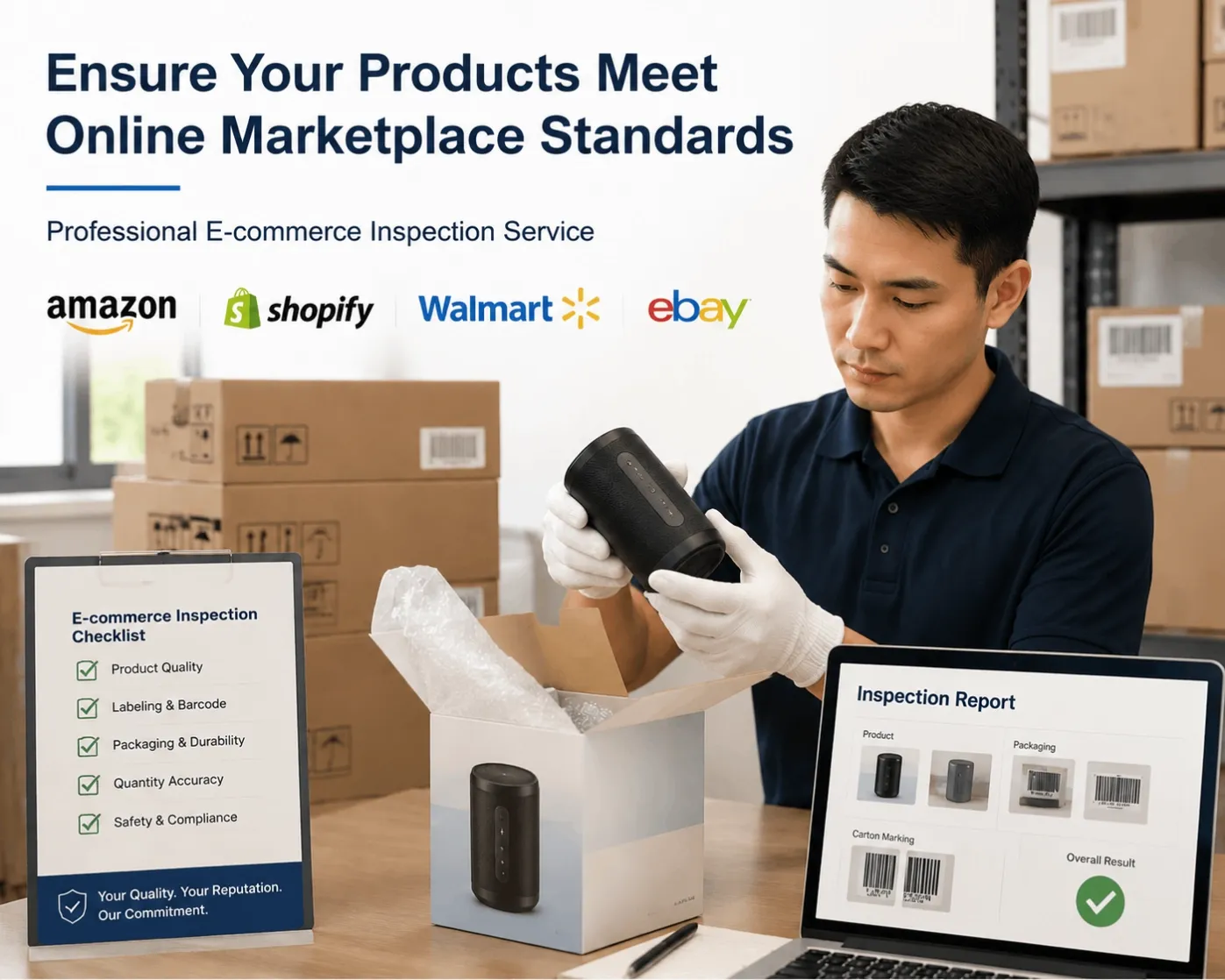
G&D provides independent E-commerce Product Inspection services in China for Amazon sellers, DTC brands, online retailers and other businesses sourcing products for online sales.
In addition to product quality and workmanship, e-commerce orders often require close attention to SKU accuracy, accessories, bundles, barcodes, labels, retail packaging and shipping preparation. Small mistakes in these areas can affect fulfillment even when the product itself is acceptable.
Our inspector checks the products and available e-commerce requirements against the references you provide, then documents the findings in an independent inspection report.
Starting from USD 160 per man-day.
When Should You Arrange an E-commerce Product Inspection?
An E-commerce Product Inspection is normally arranged before goods leave the factory or are delivered to a fulfillment center, warehouse or logistics provider.
It can be particularly useful when:
- You are placing a first order with a new supplier.
- A new product or SKU is being launched.
- Goods will be shipped directly to an Amazon or other marketplace fulfillment center.
- Products will be sent directly to a third-party warehouse without further inspection.
- Retail packaging, labels or artwork have changed.
- The order contains multiple SKUs.
- Products are sold as bundles, sets or multipacks.
- Accessories or inserts must be included with each product.
- Previous orders have resulted in customer complaints or returns.
- Repeat orders require consistent product and packaging quality.
The inspection scope should be based on the product, sales channel and specific requirements of your order.
What We Check During an E-commerce Product Inspection
The exact checklist depends on your product, order specifications, packaging requirements and sales channel.
Product Quality & Workmanship
Products are checked for visible defects and workmanship issues relevant to the item.
Examples may include:
- Surface defects
- Poor finishing
- Incorrect assembly
- Sewing or construction problems
- Loose or missing components
- Damage
- Contamination
- Other visible deviations from approved requirements
Where applicable, defects can be classified according to the agreed inspection criteria.
Product Specifications & Dimensions
Important product details can be checked against the approved specifications.
Depending on the product, this may include:
- Dimensions
- Weight
- Material or component references
- Construction
- Product configuration
- Color
- Model or style
- Other measurable requirements
Material composition or properties requiring laboratory analysis cannot normally be confirmed through visual inspection alone.
Function Checks
Basic functional checks can be performed where appropriate.
The inspection may check whether the product operates or performs as expected under the agreed basic test conditions.
Specialized safety, chemical, durability, regulatory or performance testing may require independent laboratory testing.
SKU & Order Accuracy
For e-commerce orders containing multiple product references, the inspector can compare available products against the SKU or order information provided.
This may include:
- SKU
- Model
- Size
- Color
- Style
- Quantity
- Product variation
- Corresponding packaging or label
This helps identify mix-ups between visually similar products or product variants.
Accessories & Bundle Completeness
For products sold as sets, kits, bundles or multipacks, the inspector can check whether the required components are included.
This may include:
- Accessories
- Spare parts
- Manuals
- Inserts
- Promotional items
- Product sets
- Multipack quantities
The required configuration should be provided before the inspection.
Color, Artwork & Branding
Where applicable, available products and packaging can be checked against approved references for:
- Product color
- Printed artwork
- Logos
- Branding
- Printed text
- Packaging graphics
- Inserts
- Other visual details
Barcodes & Labeling
The inspector can check available labels and barcodes against the information supplied for the inspection.
This may include:
- Product labels
- SKU labels
- Barcode labels
- FNSKU labels where applicable
- Care labels
- Warning labels
- Country-of-origin markings
- Carton labels
- Other required markings
Where suitable, barcode readability can also be checked using available scanning methods.
The inspection verifies observable labels and information against the references provided. It does not independently guarantee marketplace database registration, listing status or platform acceptance.
Retail Packaging
Retail packaging is particularly important for products that may reach the end customer without additional repacking.
Available packaging can be checked for:
- Correct packaging type
- Packaging dimensions where required
- Product-to-package matching
- Printed artwork
- Labels
- Inserts
- Protective materials
- Packaging condition
- Packaging closure
- Quantity per retail pack
Any specific packaging requirement should be included in the inspection instructions.
Cartons & Shipping Marks
Outer cartons and available shipment markings can be checked against the buyer's requirements.
This may include:
- Carton dimensions
- Carton condition
- Quantity per carton
- Shipping marks
- Carton labels
- SKU identification
- Barcode labels
- Gross and net weight where applicable
- Packing configuration
This inspection does not replace Container Loading Supervision when monitoring the actual loading process is required.
Quantity & Packing Configuration
The inspector can check available quantities and packing configurations according to the agreed inspection scope.
For multi-SKU orders, particular attention can be given to whether the correct product variants are packed in the corresponding retail packages and cartons.
The report records the quantities and packing status that can actually be observed during the inspection.
Amazon FBA & Other Marketplace Requirements
E-commerce sellers may have additional packaging, barcode, labeling or shipment-preparation requirements imposed by Amazon or another marketplace or fulfillment provider.
If you provide the applicable requirements before the inspection, G&D can include observable items in the inspection checklist, such as:
- FNSKU or other specified labels
- Barcode placement
- Product labeling
- Polybag or packaging requirements
- Warning labels
- Bundle or set identification
- Carton labels
- Packing configuration
- Other observable shipment-preparation requirements
Marketplace and fulfillment requirements can change. G&D therefore checks against the requirements and references provided for the specific inspection rather than representing that an inspection guarantees platform compliance.
An inspection cannot guarantee acceptance by Amazon, another marketplace, a fulfillment center or a logistics provider.
How Our E-commerce Product Inspection Works
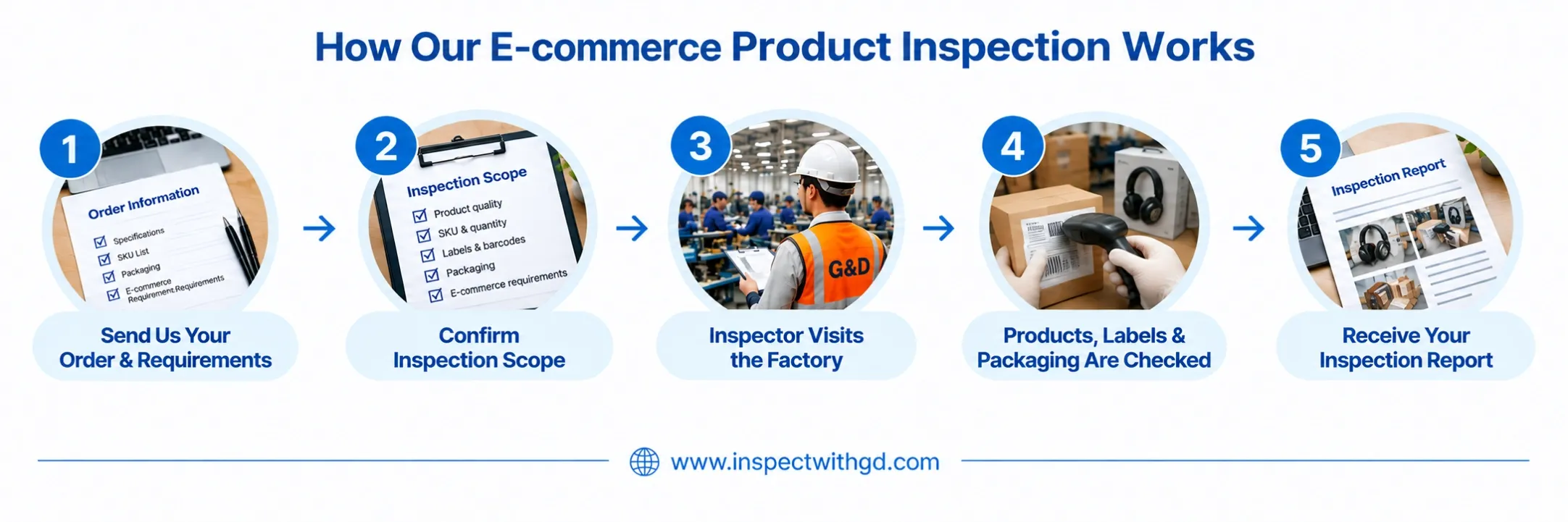
1. Send Us Your Order & E-commerce Requirements
Provide your PO, product specifications, SKU list, approved sample information, artwork, labels, packaging requirements and any marketplace or fulfillment requirements that should be checked.
2. We Confirm the Inspection Scope
We review the information and confirm the products, SKUs, quality checks, labeling, packaging and other requirements included in the inspection.
3. Inspector Visits the Factory
Our inspector attends the factory or agreed inspection location and confirms the products and packaging available for inspection.
4. Products, Labels & Packaging Are Checked
The inspector performs the agreed checks on product quality, specifications, function, SKU accuracy, accessories, bundles, labels, barcodes, packaging and shipment preparation as applicable.
5. Receive Your Inspection Report
You receive an independent report documenting the inspection findings, photos, identified deviations and relevant limitations.
What Information Should You Provide Before the Inspection?
Useful information may include:
- Purchase order
- Product specifications
- SKU list
- Approved or golden sample information
- Product listing or reference photos
- Technical drawings
- Color references
- Artwork files
- Barcode files or numbers
- Label requirements
- Packaging artwork
- Retail packaging requirements
- Bundle or set configuration
- Accessories list
- Carton marks
- Packing requirements
- Marketplace or fulfillment requirements
- Previous customer complaints or returns
- Previous inspection findings
- Your own inspection checklist or critical points
For multi-SKU orders, a clear SKU list showing the differences between each product variation is particularly useful.
What Will You Receive in the Inspection Report?
The report may include:
- Order and inspection information
- Available and inspected quantities
- SKU information
- Product quality and workmanship findings
- Specification and measurement results
- Function-check results where applicable
- Accessories and bundle findings
- Color, artwork and branding observations
- Barcode and labeling findings
- Retail packaging findings
- Carton and shipping-mark observations
- Packing configuration
- Photos of inspected products and packaging
- Defects or deviations identified
- Items that could not be verified
- Relevant limitations of the inspection
The report documents what was available and observable at the time of inspection. The final decision regarding acceptance, rework, shipment or other corrective action remains with the buyer.
E-commerce Product Inspection vs Final Random Inspection (FRI)
An E-commerce Product Inspection and a Final Random Inspection (FRI) can use a similar pre-shipment inspection approach when the goods are already completed.
The main difference is the inspection emphasis.
A standard FRI focuses on whether randomly selected finished products meet the agreed product and order requirements before shipment.
For an e-commerce order, the inspection checklist can place additional emphasis on:
- SKU accuracy
- Product variations
- Accessories and bundles
- Barcodes
- Labels
- Retail packaging
- Product-to-package matching
- Carton identification
- E-commerce or fulfillment preparation requirements
In simple terms:
- FRI: Does the finished batch meet the agreed requirements before shipment?
- E-commerce Inspection: Are the products and e-commerce-specific order details ready for the intended online-sales and fulfillment process?
E-commerce Product Inspection does not replace FRI as a separate inspection methodology in every case. The appropriate inspection setup depends on the production stage, shipment arrangement and requirements you want checked.
What Can and Cannot Be Verified During an E-commerce Product Inspection?
Depending on the agreed scope, the inspection can provide independent information about:
- Product quality and workmanship
- Observable specifications and dimensions
- Basic product function
- SKU and product variation accuracy
- Accessories and bundle completeness
- Color, artwork and branding
- Observable barcodes and labels
- Retail packaging
- Cartons and shipping marks
- Packing configuration
- Observable marketplace or fulfillment requirements provided for the inspection
However, the inspection cannot guarantee:
- Future customer reviews or ratings
- Customer return rates
- Marketplace listing approval
- Marketplace or fulfillment-center acceptance
- Seller account status
- Customs clearance
- Future transportation damage
- Product performance after prolonged use
- Regulatory compliance requiring formal certification or laboratory testing
- Material composition requiring laboratory analysis
- Marketplace database information that cannot be independently accessed or verified during the inspection
It is a point-in-time inspection of the products, packaging and information available on the inspection date.
E-commerce Product Inspection Cost in China
Starting from USD 160 per man-day.
The final cost depends on the factory location, number of SKUs, inspection scope, product complexity and time required on site.
Orders containing many SKUs, product variations, bundles or detailed packaging and labeling requirements may require additional inspection time.
Travel costs may apply when the inspection location is outside our normal inspector coverage.
We confirm the scope, timing and cost before booking.
Frequently Asked Questions
What is an E-commerce Product Inspection?
An E-commerce Product Inspection checks products intended for online sale against the buyer's quality, SKU, labeling, packaging and other agreed requirements before shipment or fulfillment.
Who is this service for?
It can be used by Amazon sellers, DTC brands, online retailers, marketplace sellers and other businesses sourcing products for e-commerce sales.
Can you inspect products for Amazon FBA?
Yes. If you provide the applicable Amazon/FBA requirements, the inspection can include observable product, labeling, barcode, packaging and shipment-preparation points.
The inspection does not guarantee acceptance by Amazon or an Amazon fulfillment center.
Can you check FNSKU labels and barcodes?
Yes. Available FNSKU labels, other barcode labels, placement and printed information can be checked against the references you provide.
Where suitable, barcode readability can also be checked. This does not independently guarantee marketplace database registration or listing status.
Can you check bundles, sets and accessories?
Yes. If you provide the required bundle or set configuration, the inspector can check whether the specified products, accessories, manuals, inserts or other components are included.
Is E-commerce Product Inspection the same as FRI?
Not exactly. An e-commerce inspection may use a similar pre-shipment inspection approach, but the checklist places additional emphasis on e-commerce-specific details such as SKUs, product variations, bundles, barcodes, labels and retail packaging.
Does the inspection guarantee marketplace acceptance?
No. G&D checks observable requirements against the references provided for the inspection. Marketplace rules and acceptance decisions remain under the control of the relevant platform or fulfillment provider.
Can you inspect a product after we receive customer complaints?
Yes. Previous complaints, return reasons, photos or known defect information can be incorporated into the inspection checklist where the issue can be checked during the factory inspection.
How much does an E-commerce Product Inspection cost in China?
Our E-commerce Product Inspection service starts from USD 160 per man-day. Travel costs or additional man-days may apply depending on location, number of SKUs and inspection scope.
Check Your E-commerce Products Before They Leave the Factory
E-commerce orders involve more than the product itself. SKU mix-ups, missing accessories, incorrect labels, barcode errors and packaging problems can create issues even when product workmanship is acceptable.
An independent E-commerce Product Inspection gives you documented information about the products and e-commerce requirements available before shipment.
Send us your order information, SKU list and packaging or fulfillment requirements to arrange an E-commerce Product Inspection in China.