
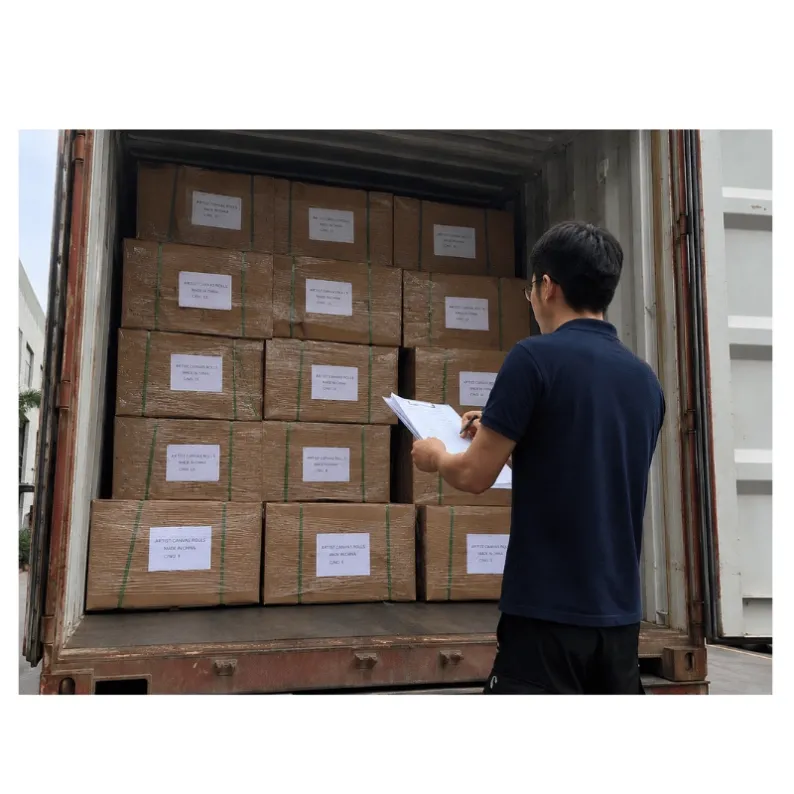
Quality Inspection Services
Container Loading Supervision & Inspection in China | G&D
Independent Container Loading Supervision (CLS) and Container Loading Inspection in China. We check container condition, cargo quantity, SKU and packing information, carton condition, loading and stacking, container and seal numbers. Receive an independent report with photos and findings within 24 hours. From USD 200 per man-day.
Container Loading Supervision (CLS) in China
Verify what is loaded, how it is loaded, and how the container is sealed before shipment.
Container Loading Supervision (CLS), also commonly referred to as a Container Loading Inspection, provides independent on-site monitoring while your finished goods are loaded for shipment.
Our inspector attends the factory, warehouse or loading location to check the visible condition and identification of the container, verify cargo quantities and shipping information, monitor the loading process, and record the container and seal numbers.
You receive an independent loading report with findings, photos and relevant loading records to help you verify what happened during loading before the shipment leaves the loading site.
Starting from USD 200 per man-day.
When Should You Arrange Container Loading Supervision?
CLS is normally arranged for the scheduled loading date, when the finished goods are ready for shipment and the container is due to arrive at the loading location.
It can be particularly useful when:
- You are working with a new supplier.
- The shipment contains multiple SKUs, models or carton types.
- The order is high-value or commercially important.
- You have concerns about shortages or incorrect goods being loaded.
- The products require careful handling or specific loading arrangements.
- Previous shipments have had damaged cartons, loading or quantity problems.
- You need independent records of the loading process, container number and seal number.
- The shipment is being loaded without you or your own team present.
If your main concern is the quality of the finished products themselves, a Final Random Inspection (FRI) should normally be arranged before loading.
What We Check During Container Loading Supervision
The exact scope depends on your shipment and agreed requirements. CLS generally follows the process from checking the empty container and cargo prepared for shipment through loading, closing and sealing.
Before Loading
Container Identification
The container number and other available identification details are recorded before loading so that the supervised loading process can be linked to the specific container used for the shipment.
Container Condition
Before loading begins, the inspector visually checks the available container for conditions that may present an obvious risk to the cargo.
Typical observations include:
- General cleanliness
- Visible holes or damage
- Signs of moisture or water
- Unusual odors
- Visible contamination
- Condition of the floor, walls, doors and roof
- Other visible conditions that may affect loading
The inspector records the observed condition of the container before cargo is loaded. This is a visual on-site check and is not a technical certification of the container.
Cargo & Packing Information
The inspector reviews the available shipment information and checks the cargo prepared for loading against the documents and requirements you provide.
Depending on the shipment, this may include:
- Expected carton quantity
- SKU, model, size or color information
- Carton markings
- Shipping marks
- Visible carton condition
- Packing list information
- Agreed packaging requirements
Any obvious discrepancies observed before loading can be documented before the cargo enters the container.
During Loading
Once loading begins, the inspector monitors the process and records the cargo and visible loading conditions.
Quantity, Assortment & Product Identification
The inspector monitors the quantities being loaded and, where applicable, checks SKU, model, size, color, product codes or other available identification against the packing list and shipment information provided by the buyer.
Carton Condition
Visible carton damage, crushing, moisture, opened cartons or other obvious packaging problems observed during loading are recorded.
Handling
The inspector observes how the goods are handled during loading and records obvious handling practices that may present a risk to the shipment.
Loading & Stacking
The loading arrangement is observed for issues such as poor stacking, unstable placement, excessive crushing or failure to follow specific loading instructions provided before the supervision.
Loading Progress
Photos are taken during the loading process to document the progress and visible condition of the cargo inside the container.
If discrepancies or significant visible problems are identified during loading, they are recorded in the supervision findings.
After Loading & Sealing
When loading is completed, the inspector records the final loading information available on site.
This normally includes:
- Final loaded quantity
- Container number
- Seal number
- Photos of the loaded container
- Final visible loading condition
- Container closing and sealing
- Any discrepancies or relevant remarks observed during supervision
This provides an independent record of the loading process up to the point observed by the inspector.
How Our Container Loading Supervision Works
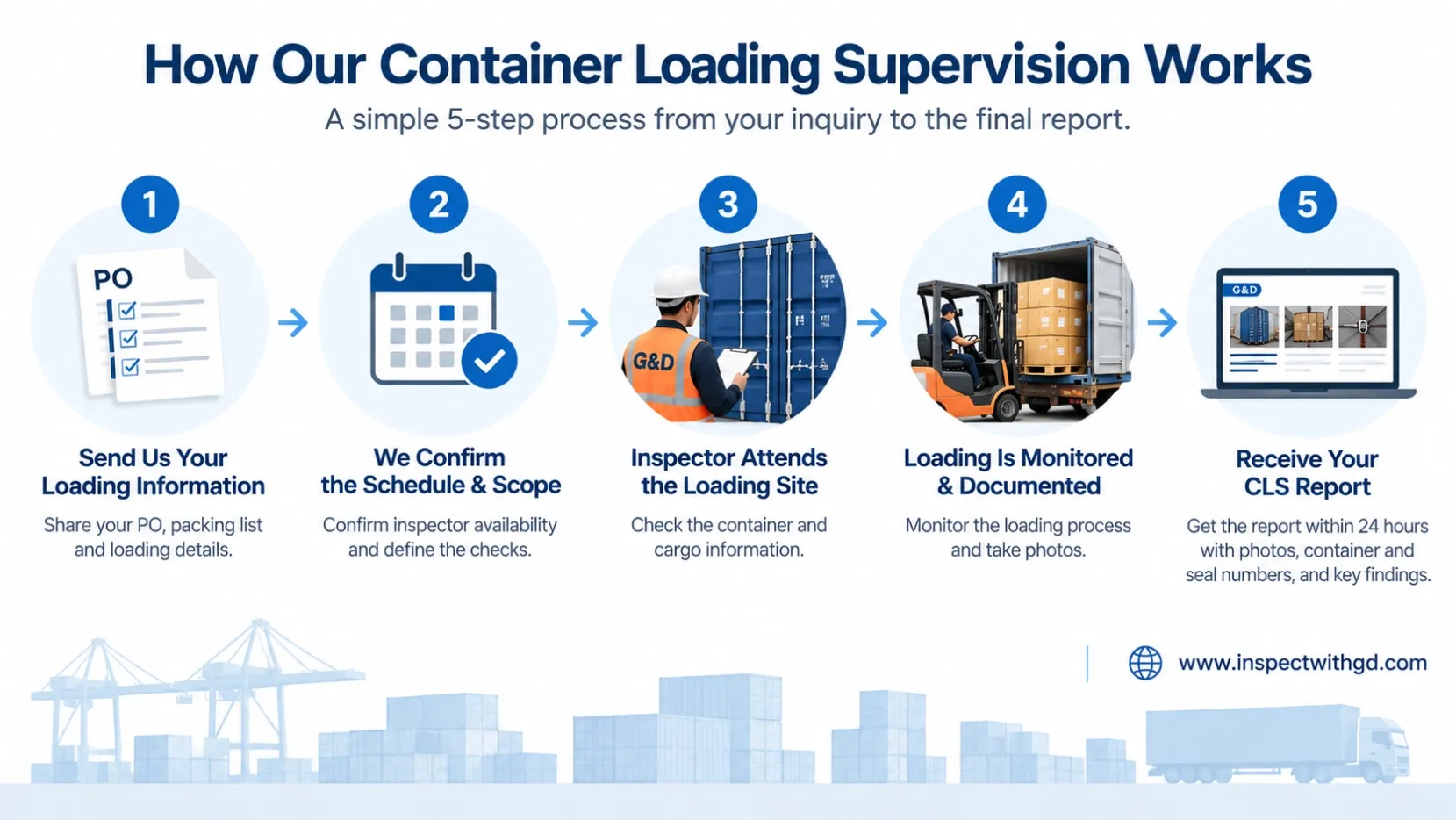
1. Send Us Your Loading Information
Share your PO, packing list, shipment quantity, loading address, expected loading date and time, and any specific loading or packaging requirements.
2. We Confirm the Schedule & Scope
We review the information, confirm inspector availability and define the checks required during loading.
3. Inspector Attends the Loading Site
Our inspector arrives at the factory, warehouse or agreed loading location and checks the available container and cargo information before loading begins.
4. Loading Is Monitored & Documented
The inspector monitors the loading process, records quantities and visible conditions, takes photos and documents relevant discrepancies or observations.
5. Receive Your CLS Report
Our standard target is to issue the report within 24 hours after the loading supervision is completed. The report documents the loading information, observations, photos, container and seal numbers, and relevant findings.
What Information Should You Provide Before Loading?
Providing accurate shipment information before the scheduled loading helps the inspector prepare the appropriate supervision scope.
Depending on your shipment, useful information may include:
- Purchase order
- Packing list
- Product and SKU information
- Expected carton quantity
- Loading address
- Factory or warehouse contact
- Expected loading date and time
- Container type and quantity, if known
- Shipping marks and carton requirements
- Loading plan, if applicable
- Special handling or stacking instructions
- Known concerns from previous shipments
If there are particular issues you want the inspector to pay attention to, inform us before the loading date so they can be included in the agreed scope.
What Will You Receive in the CLS Report?
Your Container Loading Supervision report typically includes:
- Shipment and supervision information
- Loading location and date
- Available cargo information
- Container condition observations
- Loaded quantity information
- SKU or assortment findings where applicable
- Carton and packaging observations
- Loading and handling observations
- Container number
- Seal number
- Photos before, during and after loading
- Video evidence upon request
- Discrepancies or relevant limitations
The report provides an independent record of what was observed during the supervision period.
It should be used together with your order documents and other quality-control information when reviewing the shipment.
Container Loading Supervision vs Final Random Inspection
Container Loading Supervision and Final Random Inspection are performed at different stages and address different risks.
Final Random Inspection (FRI)
FRI focuses primarily on the finished products themselves. Randomly selected samples are checked for workmanship, measurements, function, labeling, packaging and other agreed requirements before shipment.
Container Loading Supervision (CLS)
CLS focuses primarily on the loading process. It checks what cargo is being loaded, the visible condition of the container and cartons, quantities, loading and handling, and the container and seal information.
CLS therefore does not normally replace a Final Random Inspection.
For higher-risk shipments, FRI can be carried out first to evaluate finished product quality, followed by CLS on the loading date to monitor the cargo being loaded.
What Can and Cannot Be Verified During CLS?
Container Loading Supervision provides independent observation of the loading process during the period the inspector is present.
Depending on the agreed scope, CLS can help document:
- The identity and visible condition of the container
- The cargo and carton information available at the loading site
- Quantities loaded
- SKU, model or other available product identification
- Visible carton condition
- Handling and stacking during loading
- Container and seal numbers
- The visible loading process through photographs and inspection records
However, CLS is not a substitute for a detailed product inspection.
The inspector does not normally open and inspect a statistically selected sample of finished products in the same way as an FRI. Product defects hidden inside closed cartons may therefore not be identified during standard loading supervision.
CLS also does not replace laboratory testing, certify the technical condition of the shipping container, or guarantee that damage or changes cannot occur later during transportation.
The scope is limited to what can reasonably be observed and checked at the loading site during the supervision period.
Common Loading Problems CLS Can Help Identify
Problems can still occur during loading even when the goods themselves have already been produced and packed.
Issues observed during CLS may include:
- Incorrect carton quantities
- Wrong SKU or assortment
- Damaged or wet cartons
- Incorrect shipping marks
- Visibly unsuitable container condition
- Poor stacking or cargo placement
- Rough handling during loading
- Differences between the packing information and cargo loaded
Container Loading Supervision Cost in China
Starting from USD 200 per man-day.
The final cost depends on the loading location, expected loading duration, number of containers, supervision scope and whether multiple loading locations are involved.
A standard loading supervision may be completed within one man-day when the loading process is completed as scheduled.
If loading is delayed or continues beyond the booked inspection period and requires additional inspection time, an additional man-day may apply.
Travel costs may also apply for locations outside our normal inspector coverage.
Send us the loading address, expected loading date, shipment quantity and container information, and we will confirm the cost before booking.
Frequently Asked Questions
What is Container Loading Supervision?
Container Loading Supervision is an on-site service in which an independent inspector attends the loading location to monitor and document the container condition, cargo information, quantities, loading process and final sealing.
Is Container Loading Supervision the same as Container Loading Inspection?
The terms are often used for similar services. Both generally refer to independent checks carried out while goods are being loaded for shipment. The exact supervision scope should be agreed before booking.
Does CLS replace a Pre-Shipment Inspection?
No. CLS primarily focuses on the loading process rather than conducting a detailed random inspection of finished products. If product quality is the main concern, a Pre-Shipment Inspection or Final Random Inspection should normally be arranged before loading.
When should CLS be scheduled?
CLS should be scheduled for the actual loading date. The loading address, expected starting time and shipment information should be confirmed as early as possible so inspector availability can be arranged.
Does the inspector stay for the entire loading process?
The inspector normally supervises the loading process within the agreed booking period. If loading is delayed or continues beyond the booked period and requires additional inspection time, an additional man-day may apply.
How quickly will I receive the CLS report?
Our standard target is to issue the CLS report within 24 hours after the loading supervision is completed.
Need Container Loading Supervision in China?
Send us your loading location, expected loading date, shipment quantity, number of containers and any specific loading requirements.
We will review the information and confirm the supervision scope, timing and cost before booking.
Starting from USD 200/man-day.