Aug 24, 2026Quality Inspection Guides
Container Loading Supervision: What Can Go Wrong During Loading?
Learn what can go wrong during container loading in China and how supervision verifies container condition, carton quantities, SKU mix, handling, and sealing.
What Can Go Wrong During Container Loading? Why Loading Supervision Matters
Your goods passed the final inspection. The factory corrected the recorded issues, and the shipment is ready. A few days later, the container arrives and loading begins.
At this point, product quality is no longer the only question. You also need to know whether the correct goods, quantities, and cartons are being loaded and whether the visible loading condition matches the shipping plan.
Final Random Inspection and Container Loading Supervision take place at different times. The first verifies finished goods before shipment. The second observes what happens when those goods are physically loaded and the container is sealed.
Passing Inspection Does Not Verify the Loading Process
A Final Random Inspection (FRI) checks randomly selected finished goods against your requirements before shipment. It can show workmanship, quantity information, measurements, functions, labels, accessories, and packaging within the agreed scope.
Loading happens later. Cartons may be moved to another warehouse area, reorganized by SKU, added after rework, or handled several more times. A revised shipping plan may also change the quantity or product mix assigned to one container.
None of these situations automatically suggests deliberate substitution. It means only that inspection and loading are separate events. What Happens During a Final Random Inspection (FRI)? explains the finished-goods stage; loading supervision begins where that process ends.
What Can Go Wrong During Container Loading?
The Loaded Quantity Does Not Match the Plan
The factory may prepare the correct total quantity, yet the number of cartons loaded into a particular container can still differ from the packing list. A loading count helps identify shortages, excess cartons, or cartons left in the loading area before the doors are closed.
The SKU Mix Is Incorrect
Mixed orders create another risk. Similar cartons may contain different models, colors, sizes, or customer allocations. If the total carton count is correct but one SKU is over-loaded and another is missing, the error may not become clear until the shipment is received.
Cartons Are Damaged or Wet
Cartons can be crushed, torn, punctured, or exposed to water before loading. They may also be damaged by forklifts, dragging, or unstable stacking during the loading process. Recording their visible condition helps separate pre-existing damage from later transport issues.
The Container Has Visible Problems
An empty container may have visible holes, standing water, dirt, a strong odor, damaged flooring, or other obvious conditions that make it unsuitable for the planned goods. These points need to be observed before the first cartons block access to the container interior.
The Loading Arrangement Increases Handling Risk
Poor use of space, unstable stacks, heavy cartons placed on lighter cartons, or large gaps can increase movement and crushing risk. Loading supervision can record the arrangement and raise visible concerns while loading is still taking place, although it is not a transport-engineering certification.
There Is No Clear Loading Record
Without independent photos and counts, you may have limited evidence of which cartons entered the container, the visible condition during loading, and which seal number was recorded. A loading record does not prevent every later issue, but it gives you a clearer starting point if a discrepancy appears at destination.
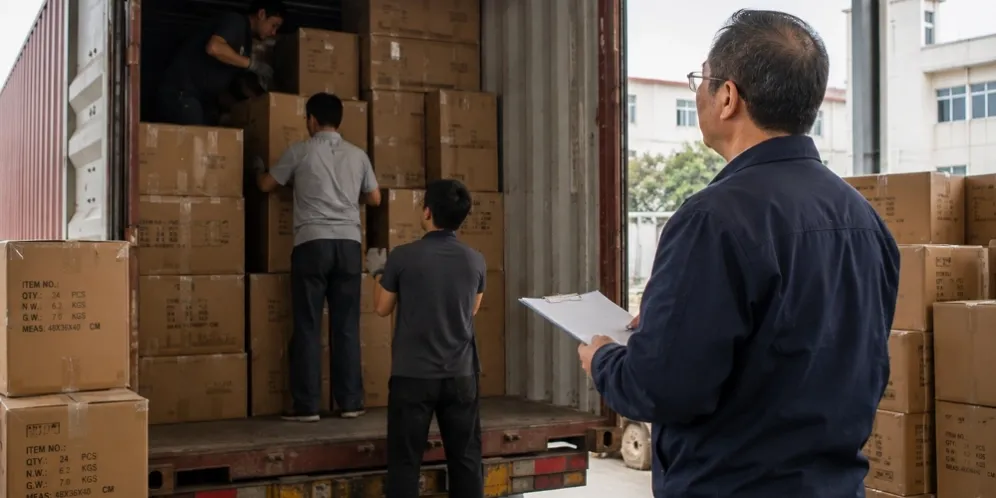
What Happens During Container Loading Supervision
Before Loading Starts
The inspector records the container number where applicable and visually checks the empty interior, doors, floor, cleanliness, dryness, odor, and obvious damage. Available cartons and quantities are reviewed against the loading information, and visibly damaged cartons can be documented before handling begins.
While Cartons Are Being Loaded
Carton or product identification is observed as the goods move into the container. The inspector counts loaded quantities, follows the SKU mix, records loading progress, and watches handling and stacking for visible problems. For sealed cartons, this stage verifies external identification and loading records rather than repeating a detailed product inspection inside every carton.
After Loading Is Completed
The final loaded quantity is reconciled with the observed count. Photos record the completed loading condition, and container and seal information can be noted where applicable. The report states what was available and observed at the loading site; it cannot control what happens after the container leaves.
Container Condition Should Be Checked Before the First Carton
Once a container is partly filled, the floor, front wall, and lower corners become difficult to inspect. This is why the empty-container check should happen before loading starts, not after several rows of cartons are already in place.
Textiles, pillows, garments, paper products, and other moisture-sensitive goods can be particularly vulnerable to visible water or a damp container. If water, holes, contamination, strong odor, or serious damage is found, the condition can be recorded before the supplier decides whether loading should proceed.
This remains a visual check. It does not certify the container, guarantee that no moisture will enter during transit, or replace suitable packaging and moisture-control measures for the product.
Why Quantity and SKU Verification Matter
Consider a shipment with three product models, several carton markings, and a different required quantity for each SKU. The planned total is 820 cartons. Loading 820 cartons may appear correct even if 30 cartons of Model A were loaded in place of 30 cartons of Model C.
A useful loading count therefore follows both the total and the SKU breakdown. Carton markings, available packing information, and observed quantities are compared as the goods enter the container. Any unclear or mismatched identification can be photographed and recorded before sealing.
This is especially relevant for mixed-SKU loads, multiple purchase orders, retailer allocations, e-commerce inventory, and customer-specific shipments where one incorrect distribution can affect several deliveries.
Loading Supervision Is Not Another Product Inspection
FRI and CLS should not be treated as interchangeable services. Their timing, evidence, and main purpose are different.
| Final Random Inspection (FRI) | Container Loading Supervision (CLS) |
|---|---|---|
Main question | Are the finished goods acceptable? | Are the correct goods being loaded properly? |
Timing | Before shipment or loading | During container loading |
Main focus | Product quality | Loading process |
Sampling | Normally uses random sampling | Focuses on goods and cartons being loaded |
Container condition | Not the main purpose | Important part of the check |
Detailed workmanship, measurements, functions, and defect classification belong to product inspection. If you need help interpreting those findings before arranging the next stage, How to Read a Pre-Shipment Inspection Report explains how to review the report and its limitations.
When Container Loading Supervision Is Most Useful
CLS is most useful when the loading stage creates a risk that matters to your shipment decision. Typical situations include:
- a first shipment with a supplier;
- a high-value or full-container shipment;
- mixed SKUs, multiple purchase orders, or customer allocations;
- fragile or moisture-sensitive goods;
- previous quantity, carton, or loading discrepancies;
- specific loading or documentation requirements;
- a loading event that you cannot attend in person.
Not every shipment needs loading supervision. A simple repeat order with one SKU, stable carton quantities, and limited loading risk may not justify a separate visit. The decision depends on what remains uncertain after product inspection.
Using FRI and CLS at Two Different Stages
For a higher-risk shipment, the sequence may be: finished production -> Final Random Inspection -> supplier correction if required -> Container Loading Supervision -> shipment. The report from each stage supports a different decision.
FRI provides visibility into finished-goods quality before release. CLS provides visibility into the final physical loading event. For some orders FRI alone is enough; using both is useful only when product quality and loading control are separate material risks.
How GD Inspection Records the Loading Stage
GD Inspection can provide Container Loading Supervision (CLS) Service in China to independently observe the loading process and record the relevant quantities, carton identification, visible container condition, loading progress, and sealing information within the agreed scope.
Before arranging the visit, the useful information includes the packing list, SKU breakdown, expected carton quantity, loading address and schedule, and any customer-specific loading requirements. These documents establish what should be compared at the site.
Frequently Asked Questions
Is container loading supervision the same as pre-shipment inspection?
No. A pre-shipment inspection such as FRI checks finished goods before release. CLS observes the later loading event, including visible container condition, carton identity, loaded quantities, and sealing information.
Does loading supervision check product quality?
CLS may record visible carton or product concerns encountered during loading, but detailed workmanship, measurements, functions, and defect sampling should normally be handled through FRI or another suitable product inspection.
Can the inspector check whether the container is damaged?
The inspector can visually check for obvious holes, water, dirt, odor, damaged flooring, door problems, and other visible conditions before loading. This is not a technical container certification and cannot predict every transit issue.
When should I arrange container loading supervision?
Consider CLS when quantity, SKU distribution, container condition, loading arrangement, or independent loading records are important to your shipment. The loading schedule must be confirmed with the supplier so the inspector can be present before loading begins.
Do I need CLS if my goods already passed FRI?
Not always. FRI may be sufficient when the loading stage presents little additional risk. CLS becomes more relevant when you still need independent verification of the goods, quantities, cartons, or container at the moment of loading.
The Final Stage Answers a Different Question
Product inspection tells you about the finished goods. Container loading supervision records what happens when those goods are loaded and leave the factory.
When quantity, SKU accuracy, container condition, or loading control matters, checking this final stage can close the remaining information gap before the container leaves your supplier.