Aug 30, 2026Quality Inspection Guides
Pre-Production Sample Review: Is Your Sample Ready for Mass Production?
Learn what to check before approving a sample for mass production, including dimensions, materials, function, labels, accessories, artwork, and packaging.
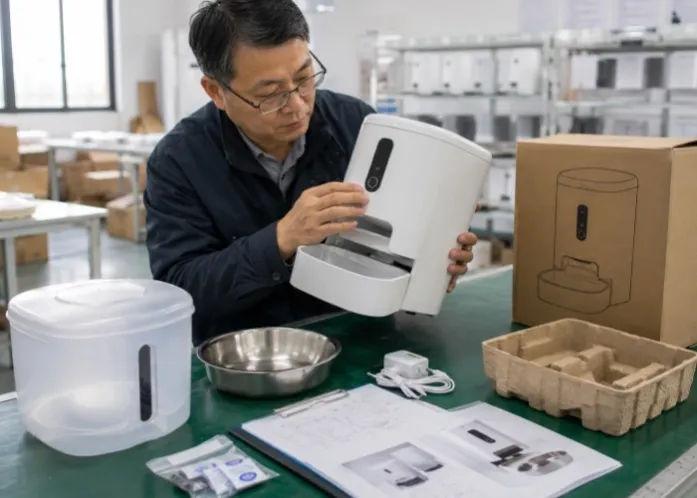
Is Your Sample Really Ready for Mass Production? A Guide to Pre-Production Sample Review
Your supplier sends you a sample. You review the photos, appearance, color, and basic function. Everything seems fine, and you are almost ready to say, 'OK, please start production.'
Before thousands of pieces are made, one question still matters: Have the product details that affect the finished order actually been confirmed?
The sample stage is usually one of the most practical points to correct unclear requirements. A change to one sample can be reviewed directly; the same detail repeated across a bulk order requires production rework, replacement, or a new decision about acceptance.
A Good-Looking Sample Can Still Leave Important Questions
Appearance is only one part of a sample review. Dimensions, materials, construction, component versions, printing position, labels, accessories, basic function, and packaging can remain unresolved even when the product looks acceptable in photos.
A storage box may have the expected color and shape while the wall thickness, hinge construction, internal dimensions, warning label, or retail packaging differs from your requirement. None of those points is answered by saying that the sample looks good.
The useful question is whether the details that matter to your product are clear enough for the sample to guide production. A pre-production review documents those details before you decide whether to accept the sample, request corrections, or ask for another version.
What Should Be Reviewed on a Pre-Production Sample?
The review scope should follow the product and the reference information you provide. A sewn item, molded product, small appliance, and private-label package do not need the same checks.
Appearance and Workmanship
Surface condition, stitching, finishing, printing, assembly, gaps, alignment, and visible defects can show whether the submitted sample reflects the expected workmanship level. Findings should identify the location and nature of the difference so the supplier knows what needs review.
Dimensions and Construction
Overall size alone may not be enough. Internal dimensions, component thickness, hole position, fitting, seam allowance, or assembly method may affect use or later production. The relevant dimensions should be measured against the available drawings, specifications, or stated requirements.
Materials and Components
Material appearance, component version, color, size, and fit can be compared with the information available from you. Visual review cannot confirm chemical composition, material formulation, grade, or laboratory performance; those requirements need the appropriate documents or formal testing.
Basic Function
Where applicable, the sample can be opened, closed, assembled, fitted, switched on, zipped, adjusted, or operated through other basic movements. These checks show whether the sample performs its immediate function, but they do not replace a specified durability or laboratory test.
Labels, Artwork, and Accessories
Product labels, required warnings, barcodes, logos, printed artwork, and the accessory set should be compared with the latest files or comments provided. Version numbers or dates can help distinguish current artwork from an earlier file when several revisions exist.
Packaging
If packaging is available, the review may include the retail box, polybag, inserts, carton, packing method, and markings. When packaging is not yet ready, the report should state that it was unavailable rather than treating it as approved or checked.
Compare the Sample With Available Reference Information
A sample should not be judged only from memory or a general impression that it looks right. Depending on what you have available, the review may use a specification sheet, drawings, artwork, product photos, purchase order, packaging instructions, measurement requirements, previous comments, or a customer-provided reference sample.
Not every project has all these documents, and they are not automatically mandatory. The report should distinguish between confirmed requirements, information supplied for comparison, and points that remain unclear.
From our experience, sample review becomes more useful when each important requirement has one current reference. If dimensions come from one drawing, artwork from another file, and corrections from an email thread, the latest version of each item should be identified before review.
One Unclear Detail Can Become Thousands of Repeated Details
An incorrect logo position, zipper, accessory, measurement, label, or packaging artwork can usually be discussed directly on one sample. Once the same point is repeated across 1,000, 5,000, or 20,000 units, the problem shifts from sample correction to production rework.
The value of reviewing the sample before production is therefore not a promise of perfect bulk quality. It is the chance to remove known ambiguity before the factory repeats the detail across the order.
Sample Review and IPC Check Two Different Stages
A pre-production sample review checks what you intend to produce. IPC checks how that intention is being translated into actual bulk production.
| Pre-Production Sample Review | Initial Production Check (IPC) |
|---|---|---|
Timing | Before mass production | At the beginning of actual production |
What is checked | Submitted sample or reference | Actual bulk production |
Main question | Is the sample suitable as a production reference? | Did mass production start correctly? |
Focus | Product details and requirements | Bulk materials, components, setup, and early pieces |
Once production starts, an Initial Production Check (IPC) can verify available bulk materials, components, production setup, and first mass-production pieces. It does not repeat the sample decision; it checks the next stage.
An Acceptable Sample Does Not Guarantee Bulk Quality
Bulk production can still vary because materials may come from different lots, more workers or lines become involved, assembly is repeated at speed, and packaging is completed later. A correct sample establishes a clearer reference but does not control every production unit.
A During Production Check (DPC) provides visibility while meaningful bulk production is running. A Final Random Inspection (FRI) checks randomly selected finished goods before shipment. Whether your order needs one or more stages depends on its actual risk; sample review does not automatically require all later services.
When Independent Sample Review Is Particularly Useful
Independent review is most useful when the sample contains details that could remain unclear without a physical check. Typical situations include:
- a first order with a supplier;
- a new or customized product;
- a product with many components or construction details;
- private-label artwork or customer-specific packaging;
- several sample revisions or previous development misunderstandings;
- a sample located in China that you cannot examine physically before production.
A simple repeat product with a clear reference and no significant changes may not justify an independent review. The decision depends on how much uncertainty remains in the submitted sample and what would happen if the same detail were repeated in production.
Some Sample Requirements Need Formal Testing
Chemical composition, regulated properties, material performance, safety requirements, and formal durability standards cannot be confirmed through visual or basic physical review alone. When these requirements matter, the sample should be tested by a qualified independent laboratory using the relevant method.
Lab Testing Assistance Service can support sample handling and coordination with an independent laboratory. If the sample must be selected from a specified production lot, Sample Picking Service can help record selection and maintain traceability. The laboratory performs the test and issues the formal result.
How GD Inspection Documents the Sample
GD Inspection's Pre-Production Sample Review Service can independently review a sample in China against the requirements and available reference information you provide. The agreed scope may include appearance, workmanship, measurements, construction, basic function, labels, accessories, and packaging.
The findings are documented so you can decide whether the sample is acceptable, corrections are required, another sample should be prepared, or production can proceed. GD Inspection reports what was checked and found; the commercial approval decision remains with you.
Frequently Asked Questions
What is a pre-production sample?
It is a sample submitted before mass production to show the intended product, construction, materials, appearance, function, or packaging. Its exact status depends on your development process; receiving it does not mean you have approved it.
Should I inspect a sample before mass production?
Consider a review when important details remain difficult to confirm from photos or documents, or when an incorrect detail would be repeated across a customized or substantial order. Not every simple repeat product requires an independent sample review.
Is sample review the same as Initial Production Check?
No. Sample review takes place before mass production and checks the submitted sample or reference. IPC takes place after actual production begins and checks available bulk materials, components, setup, and early output.
Does an acceptable sample guarantee that bulk production will match it?
No. The sample can provide a clearer production reference, but bulk materials, workers, production speed, assembly variation, and packaging processes can still affect the finished goods. Later production verification should be selected according to order risk.
Can GD Inspection approve the sample for me?
GD Inspection can inspect the sample and report findings against the requirements and references you provide. You retain the commercial decision to accept the sample, request corrections, or authorize mass production.
Confirm the Details Before They Become the Order
A pre-production sample is more than a product that needs to look good. It may become the reference used to produce thousands of units, so the details that matter to you should be clear before production begins.
Finding one incorrect detail at the sample stage is easier to manage than finding the same detail repeated across the finished shipment.