
Sep 3, 2026Quality Inspection Guides
Factory Inspection vs Lab Testing: When Do You Need Laboratory Testing?
Learn what factory inspection can verify, when laboratory testing may be needed, and how product samples can be selected and submitted for independent testing in China.
When Is Factory Inspection Not Enough? A Guide to Laboratory Testing
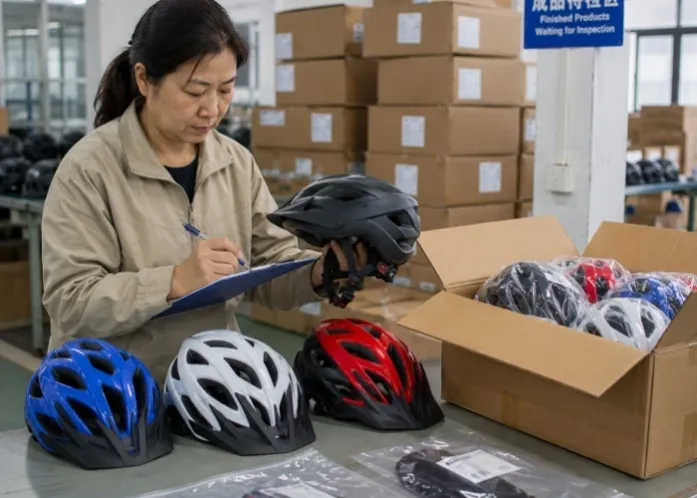
An inspector can measure a bicycle helmet, operate its buckle and adjustment system, check the labels, and record visible workmanship. None of those checks can confirm how the helmet will perform in a specified impact test.
That does not make the factory inspection incomplete. It means the performance question requires a different method. Some requirements can be verified directly on site; others need defined equipment, controlled conditions, and a laboratory test procedure.
Knowing where that boundary sits helps you set a realistic inspection scope and arrange laboratory testing only when the product, market, customer, or performance claim requires it.
What Can Normally Be Checked During a Factory Inspection?
A factory visit is well suited to requirements that can be observed, measured, counted, operated, or compared with the information you provide. Depending on the product and agreed checklist, this may include workmanship, dimensions, quantity, accessories, labels, packaging, assembly, and basic function.
The actions are practical. The inspector may measure a component with a caliper, operate a zipper repeatedly, assemble a folding chair, scan a barcode, compare carton markings, or perform a simple leakage check. The report records the method used, the selected units, and the result observed at the factory.
A Final Random Inspection (FRI) can therefore provide a useful picture of finished shipment quality before dispatch. The exact checks still depend on the product, available equipment, your requirements, and the agreed scope; a basic on-site check should not be described as proof of a formal standard unless it follows that standard.
What Visual Checks Cannot Establish
Material composition cannot be confirmed by looking at a finished product. A coating may look even without revealing whether it contains a restricted substance. An electrical product may switch on without answering electrical-safety questions. A fabric may resist a quick flame contact but still require a defined flammability method, conditioning, timing, and result criteria.
Specified durability claims can have the same limitation. Opening a buckle several times gives useful functional information, but it does not reproduce thousands of controlled cycles. Applying a load in the factory may reveal an obvious weakness, but it may not answer a standard that specifies the fixture, load rate, duration, conditioning, and reporting format.
Depending on the applicable requirement, laboratory testing may therefore be needed for chemical content, material identification, flammability, electrical safety, food-contact properties, mechanical safety, long-cycle durability, or a formal performance claim. The need comes from the question being asked, not from the product simply being sourced from China.
A Factory Test Is Useful, but It Is Not Automatically a Laboratory Test
Many factories have useful test equipment. During an on-site visit, the inspector may review the equipment, witness the factory performing an agreed test, photograph the setup, and record the displayed result. This can show how the selected unit behaved under that particular procedure on that day.
The report should state exactly what was witnessed. A 25 kg load applied for one minute is evidence of that test; it is not evidence of a different load, duration, conditioning process, or acceptance rule. From our experience, the important point is not whether a factory test looks professional, but whether its method answers your actual requirement.
Formal testing may require calibrated equipment, specified sample conditioning, trained laboratory personnel, controlled temperature or humidity, and a defined report format. If your customer or market requires a particular method or laboratory status, those details should be confirmed before samples are selected.
When Laboratory Testing Should Be Considered
A defined market or customer requirement applies
A destination market, retailer, distributor, or product specification may identify a test method, acceptance criterion, laboratory, accreditation requirement, or report format. In that situation, confirm the applicable requirement with the appropriate qualified party rather than asking the on-site inspector to make a compliance decision.
The key performance cannot be reproduced on site
Laboratory testing is appropriate when the decision depends on controlled impact performance, chemical analysis, flammability, material strength, or long-cycle durability. The test converts a broad claim such as “impact resistant” or “free from a specified substance” into a defined method and measurable result.
You need objective data for a production decision
During product development, you may need to compare materials, approve production quality, investigate a previous failure, or verify a supplier change. A laboratory result can support that decision when a visual comparison or simple functional check does not provide enough information.
Product Inspection and Laboratory Testing Answer Different Questions
| Factory Product Inspection | Laboratory Testing |
|---|---|---|
Main purpose | Verify observable shipment and product requirements | Evaluate specified characteristics using defined test methods |
Location | Factory or agreed inspection location | Appropriate independent laboratory |
Typical checks | Workmanship, dimensions, labels, packaging, assembly, basic function | Chemical, material, safety, or specified performance tests |
Sample quantity | Based on the inspection scope and sampling plan | Based on the test method and laboratory requirement |
Result | Inspection report | Laboratory test report or result |
Can it replace the other? | Not necessarily | Not necessarily |
A product can pass its laboratory test while the shipment still contains wrong labels, missing accessories, poor workmanship, or damaged packaging. It can also pass a visual and functional inspection while failing a specified laboratory requirement. One result should not be used to imply the other.
The Sample Sent to the Laboratory Matters
A laboratory can test the units it receives. It normally cannot establish whether those units were randomly selected from your intended production lot unless the selection process was separately controlled and documented.
Supplier-selected samples may be appropriate for development work or other agreed purposes. When the result is intended to provide information about actual production, you may want an independent party to identify the available lot, select the required units, photograph the source, mark the samples, and observe packing.
Sample Picking Service or witness sampling can add traceability to this stage. For a fuller explanation of what that traceability does and does not prove, see How Do You Know the Sample Really Came From Your Production?. Independent selection links the tested units to the documented production goods, but it does not automatically make a small laboratory sample statistically representative of every unit in the shipment.
Arrange the Test Before Samples Are Picked
Start by defining the requirement and confirming the test method with the appropriate laboratory or qualified party. The laboratory should advise the number of samples, their condition, any preparation restrictions, packaging needs, and submission details.
- Define the characteristic or requirement you need to verify.
- Confirm the applicable method, acceptance criteria, and laboratory requirements.
- Confirm the required sample quantity and sample condition.
- Select and identify the samples using the agreed method.
- Pack and submit them to the independent laboratory.
- Review the laboratory result before making the relevant production or shipment decision.
Selecting samples first and asking about the test later can create an avoidable delay. The laboratory may require more units, an unassembled specimen, material cuttings of a certain size, or samples that have not been used for another check. Confirming this in advance can prevent a second factory visit.
A Practical Example: 5,000 Bicycle Helmets
Suppose you source 5,000 bicycle helmets. Before shipment, selected units can be checked for visible workmanship, dimensions where applicable, straps, buckles, adjustment mechanisms, labels, packaging, and basic assembly and operation. Those checks help you understand whether the finished goods match the observable requirements you provided.
Now suppose your specification also requires performance according to a defined helmet-safety test method. The factory-floor visit cannot reproduce all required impact, retention-system, conditioning, and reporting procedures. The required helmets need to be selected in the correct condition and submitted to an appropriate independent laboratory.
The two results answer separate questions: does the finished shipment have the required construction, operation, identification, and workmanship; and did the tested helmets meet the specified laboratory requirements? Passing one does not complete the other assessment, and the laboratory result applies to the samples tested within the stated method and report scope.
When Using Both Methods Makes Sense
You may need both when a product has an important material, safety, or performance requirement and you also need visibility into finished shipment quality. This is common when a retailer requires a report, a new product uses an unverified material, or a performance claim cannot be checked reliably at the factory.
Not every product or shipment needs laboratory testing. Previous valid results, unchanged materials and construction, the product risk, destination requirements, customer requirements, and the purpose of the decision all affect the testing plan. Factory inspection may be sufficient when the relevant questions can be answered through observable checks and agreed on-site tests.
How GD Inspection Supports the Testing Process
When independent testing is required, Lab Testing Assistance Service can support the practical work in China. Depending on the agreed scope, this may include clarifying the testing request, confirming sample requirements with the laboratory, arranging sample selection, coordinating submission, following progress, and helping you receive the resulting report.
The independent laboratory performs the formal test and issues the result. GD Inspection does not replace the laboratory, issue certification, or treat an on-site check as a formal laboratory test.
Frequently Asked Questions
Can a normal product inspection replace laboratory testing?
Not when the requirement depends on a defined laboratory method, specialist analysis, or controlled conditions. On-site checks can still verify the observable quality of the shipment.
Does every product need laboratory testing?
No. Testing should reflect the product risk, destination and customer requirements, performance claims, and the information you need for a decision. Many ordinary product requirements can be checked during a factory inspection.
Can I use the factory's own test report?
It depends on your purpose and the applicable requirement. A factory report may provide useful production information, while a customer or market may require a report from a specified independent or accredited laboratory. Confirm the required source and method before testing.
Who should select the laboratory samples?
The supplier, your representative, or an independent inspector may select them. If sample origin is important to the decision, independent sample picking or witness sampling can document the available production lot and selection process.
Does a passing laboratory result mean the shipment passes inspection?
No. The laboratory result covers the tested samples and stated method. Shipment quantity, workmanship, labels, packaging, and consistency require separate verification according to your inspection scope.
Choose the Method That Answers the Question
The decision is not whether factory inspection or laboratory testing is better. If a requirement can be checked reliably at the factory, an on-site inspection may provide the information you need. If the answer depends on a defined method, specialist equipment, or controlled conditions, an appropriate independent laboratory may be required.
When you are deciding which control step fits your order, How to Choose the Right Quality Inspection Service for Your Order explains what different factory-stage services are designed to verify. The right plan starts with the requirement you need to confirm, then uses the method capable of producing that evidence.