Aug 15, 2026Importing Tips & Best Practices
Factory Audit in China: What Does an Auditor Actually Check?
Learn what a factory auditor checks in China, including production facilities, quality systems, capacity, materials, warehouse controls, records, and audit limitations.
Factory Audit in China: What Does an Auditor Actually Check?
You have identified a supplier. The sample is acceptable, the quotation is within your target, and you are considering a larger order. Before you commit more volume, you want to understand one practical question: can this factory actually support the production you are planning?
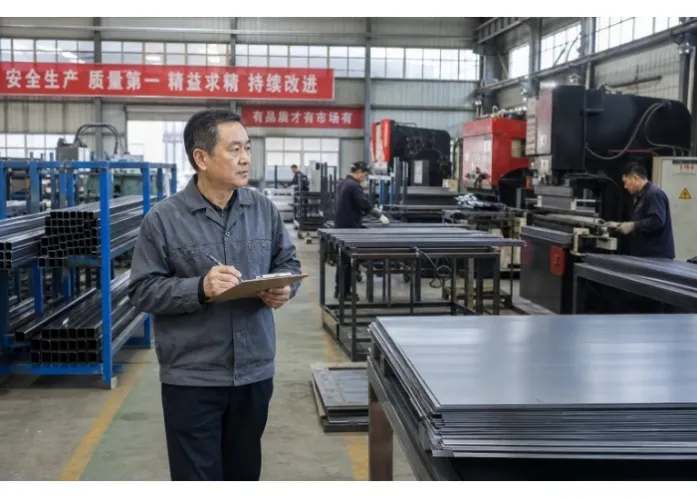
A website, quotation, video call, and sample each show part of the picture. A factory audit looks at the manufacturing site itself: the facilities, equipment, production organization, material controls, quality practices, records, and operating conditions visible during the visit.
The purpose is not to predict perfect future performance. It is to reduce the information gap before a larger sourcing decision. An audit provides a snapshot of the factory's capability and controls at the time of the visit, within the agreed scope.
For a broader explanation of how audit and product inspection answer different questions, see Factory Audit vs Product Inspection: Which One Do You Need?. This article focuses on what an auditor actually checks during the factory visit.
What Is the Main Purpose of a Factory Audit?
The main purpose is to evaluate the factory's current capability, organization, production resources, and quality-management practices. The auditor is looking for evidence that helps answer questions such as: Is the site operating? Does it have relevant equipment? Are production and quality processes defined? How are materials received, defects handled, and finished goods stored?
The auditor may also compare the observed operation with information provided about the supplier. This is not the same as independently proving every company detail or guaranteeing future output. It is a structured review of what can be seen, discussed, and documented at the site.
Factory Information and Site Overview
The visit may begin with the factory name and address, site size and layout, departments, production areas, warehouses, quality-control areas, and the number of workers observed or reported. The report may describe the general operating condition and how the site is organized around production.
This gives you context for the rest of the audit. A site with separate material, production, inspection, and finished-goods areas presents a different operating picture from a small shared space where all activities are mixed together.
An on-site observation does not independently verify every corporate registration detail. Company registration, ownership, or legal-document checks may require separate document review if they are included in the agreed scope.
Production Facilities and Machinery
The auditor may review major production equipment, assembly lines, processing machinery, test equipment, and the visible maintenance condition. The key question is whether relevant equipment is actually present and appears to be in use for the product or process being discussed.
The auditor may also ask whether some operations are outsourced. Printing, plating, painting, heat treatment, sewing, packaging, or specialized testing may take place outside the visited site. Outsourcing is not automatically a problem; the important point is knowing which processes are performed where and how the supplier controls them.
Seeing machinery does not prove a specific production output. Capacity should be considered with staffing, number of lines, cycle time, production records, current workload, and outsourced processes.
Production Capacity: What Can Be Checked and What Cannot Be Guaranteed
A supplier may say, “We can produce 50,000 pieces per month.” An auditor can look for evidence that supports or challenges that statement: production lines, machine quantity, worker count, shift arrangements, recent output records, current orders, and available floor space.
The audit can show whether the factory has resources that appear consistent with the claimed capacity at the time of the visit. It cannot guarantee that the same output will be available for your order in a different season or under different conditions.
Actual capacity can change with product complexity, material availability, staffing, maintenance, other customer orders, quality issues, and subcontracting. The report should distinguish between observed resources, records reviewed, and future performance that cannot be confirmed during one visit.
Incoming Material Control
The auditor may review how raw materials and components are received, identified, inspected, stored, segregated, and rejected when they do not meet the factory's requirements. Supplier records and nonconforming-material handling may also be reviewed when available.
For a small electrical appliance, this could include housings, cables, switches, heating elements, and packaging components. The auditor may look at whether incoming items are identified and whether there is a defined point where they are checked before entering production.
This does not mean that a visual audit confirms chemical composition, electrical safety, or material compliance. Those questions may require documents, product inspection, or independent laboratory testing depending on the requirement.
Production Process Control
The auditor may observe work instructions, production flow, process checkpoints, operator instructions, use of samples or references, work-in-process identification, and how defects are handled during production.
A good finished sample does not show how a factory controls thousands of repeated production steps. The audit helps you understand whether there is a repeatable process in place, at least as observed during the visit, and whether responsibilities are clear at key stages.
Internal Quality-Control System
Possible review points include incoming QC, in-process QC, final QC, inspection records, defect classification, quality responsibilities, corrective-action records, and available test equipment. The auditor may ask who performs each check, what is recorded, and what happens when a result is outside the factory's criteria.
A documented procedure shows what the factory says should happen. Observation and records help show whether there is evidence that the procedure is actually being used. Neither document presence nor one day's observation proves that every employee follows the process at all times.
Handling of Nonconforming Products
One useful audit question is simple: what happens when a defect is found? The auditor may look for defect identification, segregation, rework or rejection areas, defect records, root-cause review, corrective action, and approval before a product returns to production or finished-goods storage.
A factory that identifies defects but mixes rejected and acceptable goods creates a different control environment from one that has clear segregation and release steps. The audit does not judge one isolated item; it looks for the process used to prevent a known problem from moving forward unnoticed.
Warehouse and Material Traceability
Warehouse observations may cover raw-material storage, finished-goods storage, identification by model, order or batch, segregation of different customers' goods, damaged-goods handling, and environmental conditions where the product is sensitive to moisture, heat, dust, or sunlight.
The auditor may ask how materials and finished goods are located and identified. This can show whether the factory has practical controls for separating orders and following goods through production. A basic factory audit does not automatically provide formal traceability certification or prove that every movement is recorded.
Finished-Goods and Packing Controls
The audit may review the final inspection process, packing instructions, label control, accessory control, carton storage, finished-goods release, and handling before shipment. These checks evaluate the factory's process for preparing goods, not the condition of your future shipment.
If you need evidence about the actual goods in your order, a Final Random Inspection (FRI) Service or another suitable product inspection addresses a different question. The audit and the shipment inspection should not be treated as substitutes.
Quality Records and Production Documents
Depending on the scope, records may include incoming inspection sheets, in-process inspection records, final QC records, production records, equipment maintenance records, training records, nonconforming-product records, corrective-action records, and sample or reference records.
Not every factory keeps every record in the same format. The available evidence depends on factory size, product type, customer requirements, and the audit checklist. A useful report records what was reviewed, what was available, and what was missing instead of assuming that every supplier operates with the same document system.
Outsourcing and Subcontracting
A supplier may perform some operations in-house and outsource others. Common examples include printing, plating, painting, heat treatment, sewing, packaging, and specialized testing. The audit should clarify which processes are performed at the visited site and which are handled elsewhere.
The auditor may ask how outsourced parts are approved, received, inspected, and connected to the main production order. Outsourcing is not automatically negative. The commercial question is whether the arrangement is understood and whether the supplier has a way to control the outsourced work.
Worker Safety, Housekeeping, and General Management
Depending on the agreed scope, the auditor may observe workplace organization, general housekeeping, emergency exits, obvious safety conditions, equipment protection, storage organization, and basic worker-management practices.
These are basic factory observations. They should not be presented as a full social-compliance, ethical, or labor audit unless that specific audit scope has been agreed. If you need a formal assessment of working hours, wages, labor conditions, or ethical requirements, the audit type and checklist should be defined separately.
What a Factory Audit Cannot Tell You
A factory audit cannot guarantee that your future shipment will pass inspection, that the supplier will never make a mistake, or that materials, staffing, workload, and outsourced processes will remain unchanged. It also cannot prove that every employee will always follow the procedure observed during the visit.
An audit does not replace product inspection, laboratory testing, shipment verification, or commercial, legal, and financial due diligence. A factory may have relevant equipment and documented controls while a particular shipment still contains wrong dimensions, missing accessories, workmanship defects, or a performance problem.
For formal performance questions, random samples may need to be sent to an independent laboratory. Lab Testing Assistance Service can support sample coordination, while the laboratory performs the formal test and issues the result.
The boundary between factory capability and actual shipment condition is also explained in Factory Audit vs Product Inspection: Which One Do You Need?.
When Is a Factory Audit Most Useful?
A factory audit may be useful before a significant first order, before moving from the sample stage to larger production, when the product requires specific equipment or process capability, when production may involve subcontracting, or when you plan to increase order volume significantly.
Not every supplier or order needs the same level of review. The decision depends on order value, product risk, supplier history, product complexity, the consequence of failure, and how much reliable information you already have. The aim is to answer a sourcing question that cannot be answered by the sample alone.
Factory Audit vs Supplier Verification
Supplier verification usually asks who the supplier is, where it is located, what basic business or factory information can be confirmed, and whether the company and site information broadly match what was provided. It may involve document review or other background checks, depending on the scope.
A factory audit asks deeper operational questions: how production is organized, what equipment exists, how quality is controlled, what evidence supports capacity, and how materials, defects, and finished goods are managed.
There can be overlap, but the two concepts are not automatically identical. A site visit may provide useful information about both, while legal or corporate verification may still require separate checks.
A Practical Example: Metal Storage Racks
You are considering a large order of metal storage racks from a new factory. During the audit, the auditor reviews the cutting and bending equipment, welding area, powder-coating process, raw steel storage, production flow, welding inspection, coating-quality checks, hardware control, packing area, finished-goods storage, and available quality records.
The visit may show that the factory has relevant equipment and defined controls for this product. It may also show that powder coating is outsourced, that hardware is stored separately, or that welding checks are performed at a particular stage.
The audit still does not tell you whether your future shipment will have the correct dimensions, correct coating thickness, complete hardware, correct packing, and acceptable workmanship. Those points belong to inspection of the actual order or to appropriate testing. The audit explains the factory behind the order; it does not approve the order itself.
How GD Inspection Reports a Factory Audit
GD Inspection can conduct an on-site Factory Audit Service in China according to an agreed checklist and scope. The report may record the factory overview, facilities, production processes, quality controls, equipment, warehouse conditions, records reviewed, subcontracting information, observations, and photographs where appropriate.
The report provides independent information for your sourcing decision. It does not certify the supplier, guarantee approval, verify financial condition, or replace a product inspection or formal social-compliance audit unless those elements are specifically included and agreed.
Frequently Asked Questions
What is checked during a factory audit in China?
The audit may cover the site and organization, production facilities, machinery, capacity evidence, incoming materials, process control, internal QC, warehouses, records, subcontracting, and general operating conditions within the agreed scope.
Does a factory audit guarantee that the supplier is reliable?
No. It provides evidence about the conditions, resources, and controls observed during the visit. Future performance can change, so the audit should be considered a snapshot rather than a guarantee.
Is factory audit the same as product inspection?
No. A factory audit evaluates the supplier's site, resources, processes, and quality practices. Product inspection evaluates actual goods from a specific order against agreed requirements.
Can a factory audit verify production capacity?
It can review equipment, staffing, production records, shift arrangements, current workload, and other evidence related to capacity. It cannot guarantee future output under different conditions.
Does a factory audit confirm product compliance?
Not automatically. Material, safety, performance, or regulatory requirements may require document review, product inspection, or independent laboratory testing depending on the question.
Is factory audit the same as supplier verification?
Not exactly. Supplier verification focuses on basic supplier or company information, while a factory audit looks more deeply at operating capability and production controls. The scope may overlap.
A Factory Audit Gives You a Clearer Starting Point
A factory audit does not tell you that nothing will ever go wrong. It gives you a clearer picture of the factory behind the quotation and sample: what resources exist, how production is organized, how quality is controlled, what evidence supports the supplier's capability, and where important limitations remain.
That information helps you make a more informed sourcing decision and decide what further controls your order may need before production and shipment.