Jul 5, 2026Quality Inspection Guides
Why We Open Cartons the Factory Didn’t Expect Us to Open
Learn why GD Inspection selects cartons randomly during pre-shipment inspection instead of only checking cartons prepared by the factory.
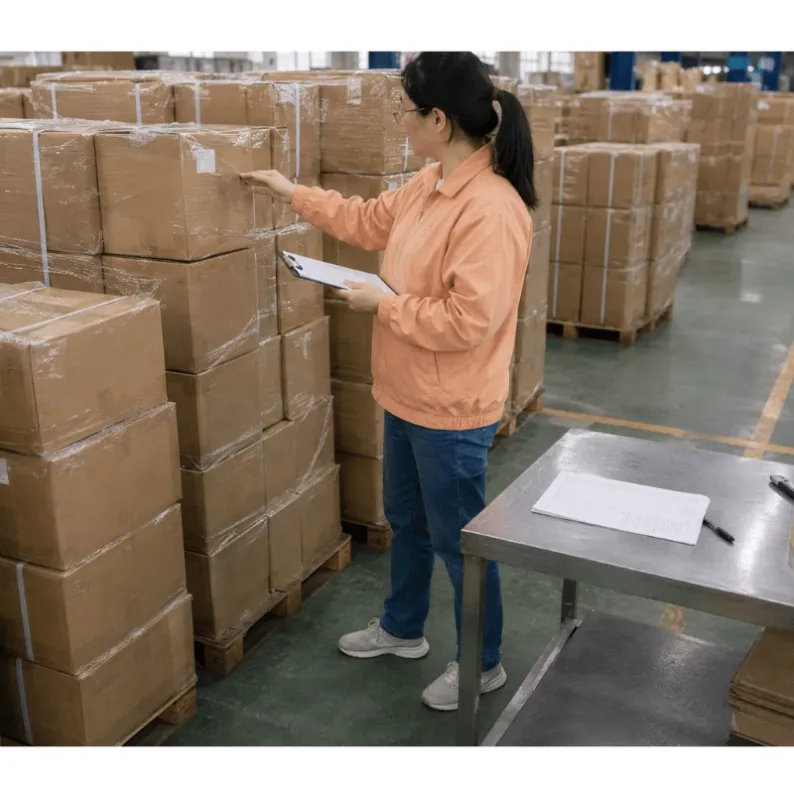
At some factories, the first cartons shown to QC are not always the cartons we choose to inspect.
The factory may point to a neat stack near the office and say, “These are ready. You can check these first.” Sometimes those cartons are fine. Sometimes they are also the best-prepared cartons in the warehouse.
That is why QC does not only inspect what is handed over.
The Factory Had Prepared a Convenient Stack
In one inspection, the factory had already moved several cartons to the front before QC arrived.
The cartons were easy to access. The packing looked tidy. The factory staff expected the inspector to open those cartons and finish the sampling quickly.
Our QC first checked the total quantity and carton list. Then he looked at the full finished goods area, not only the cartons placed near the table.
Some cartons were stacked deeper in the warehouse. Some were from a different pallet. Some had slightly different carton marks and sealing tape. Those were the cartons QC wanted to include.
QC Selected Cartons From Different Areas
The inspector selected cartons from more than one location.
A few came from the front stack. Others came from the middle and back of the finished goods area. If different sizes, colors, PO numbers or carton ranges were involved, QC made sure the opened cartons covered them where possible.
This is not done to make the factory uncomfortable.
It is done because a shipment is not represented by the easiest cartons to open. The buyer is paying for the whole shipment, not only the cleanest stack near the inspection table.
Once the selected cartons were opened, the difference became clear. The front cartons were packed neatly. One carton from the back had mixed inner packing. Another carton had labels that did not fully match the carton mark.
Why Prepared Cartons Can Give the Wrong Picture
Most factories do not deliberately hide problems.
But factory staff naturally want the inspection to go smoothly. They may choose cartons that are easy to move, already checked, or packed by the most careful worker. They may also avoid cartons that are hard to reach because opening them slows down the day.
The problem is that convenient cartons can create a cleaner picture than the shipment really deserves.
If QC only checks prepared cartons, some risks stay hidden: wrong labels in another carton range, missing accessories in one pallet, color shade difference in a different size, or packing damage at the bottom of a stack.
Random carton selection reduces that risk.
What Happened After the Other Cartons Were Opened
The issue was not found in the first carton.
It appeared only after QC opened cartons from another part of the warehouse. Inside one carton, the product was packed differently from the approved packing method. In another, the inner label information needed confirmation.
The factory first said those cartons were from the same shipment and should be fine.
QC recorded the carton numbers, took photos of the packing, and compared the opened cartons with the packing list and approved requirements. The report showed which cartons were checked and what was found inside each relevant carton.
That made the finding specific. It was not “packing may be wrong.” It was “this opened carton contained this packing difference.”
How the Report Helped the Buyer
The buyer was not at the factory, so the report had to show the sampling clearly.
QC included photos of selected cartons before opening, carton marks, inner packing, and the product condition inside. When a carton came from a different stack or pallet, that was also useful context.
This allowed the buyer to see that the inspection did not depend only on factory-prepared samples.
It also gave the buyer a practical basis to ask the factory to check other cartons in the same range. If the issue was limited, the factory could sort that carton group. If the issue appeared in several areas, the buyer could request a wider recheck before shipment.
Why This Matters for Importers
For small and medium importers, one shipment may include several sizes, colors, carton ranges or production dates.
The risk is not always evenly spread. One section of the warehouse may be correct. Another may contain goods packed by a different team. A carton from the bottom layer may have more damage than cartons displayed at the front.
This is why GD Inspection opens cartons the factory did not necessarily expect us to open.
The goal is not to make inspection difficult. The goal is to give the buyer a more honest view of the shipment.
What This Reminds Us
A good inspection starts before the product is checked.
It starts with choosing the right cartons to open.
If the carton selection is weak, the rest of the inspection may look clean while the real shipment risk remains untouched. If carton selection is handled properly, the buyer has a much better chance of seeing what is actually waiting to ship.
The cartons the factory prepares may be convenient; the cartons QC selects tell the better story.