
Jul 5, 2026Common Quality Issues
Why We Always Compare Garments Under Natural Light
Learn why GD Inspection compares garments from different cartons and sizes under natural light to identify color shading before shipment.
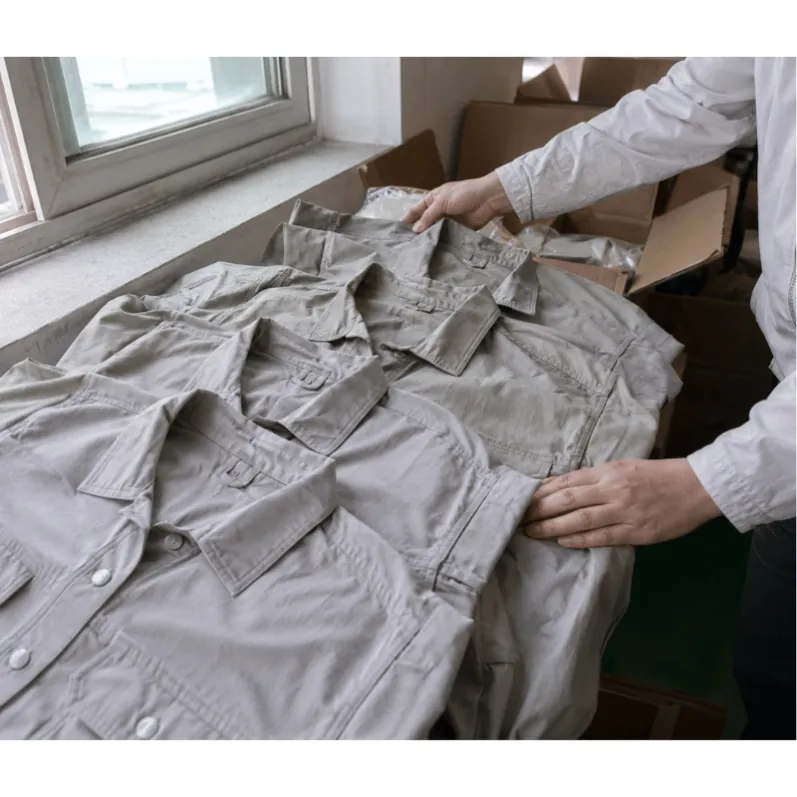
Color shading is not always found by checking one garment at a time.
During garment inspections, our QC often takes pieces from different cartons, different sizes, and sometimes different production lots, then places them together for comparison. When the garments are viewed side by side, a shade difference that looked invisible on one piece can become clear.
This is why we do not rely only on the factory’s indoor lighting.
The Problem Often Appears Only After Pieces Are Put Together
A shirt, jacket, vest, or uniform may look acceptable when it is checked alone.
The issue starts when several pieces are placed next to each other. One piece may look slightly redder. Another may look duller. A size M may look different from size XL. A sleeve panel may look close under factory light, but different near a window.
In real sales situations, customers compare products naturally. A retailer hangs several pieces on the same rack. A uniform buyer distributes garments to a team. An online customer may reorder the same color later and notice the difference immediately.
That is why QC needs to compare garments as a group, not only as individual pieces.
Why Factory Lighting Can Hide Shade Difference
Factory lighting is not always reliable for color checking.
Some inspection rooms use yellowish lamps. Some warehouses are dark. Some finished goods areas mix daylight with LED lighting. Under those conditions, two garments may look close enough even when the shade difference is visible outside.
Natural light gives a more honest view of the fabric color.
During inspection, when color consistency is a concern, our QC may take selected garments near a window or another suitable natural-light area. The garments are placed flat or hung together, then compared with the approved sample if it is available.
The point is not to create a perfect photo studio. The point is to see the goods in a lighting condition closer to how customers may see them.
How QC Actually Compares the Garments
The process is simple, but it must be done carefully.
QC does not only take several pieces from the same open carton. Garments are selected from different cartons. If the order includes several sizes, QC tries to include different sizes in the comparison. If there are different colors or production lots, those are also checked separately.
The selected garments are placed side by side.
Then QC compares the body fabric, sleeves, collars, cuffs, panels, and any contrast parts that should match. If an approved sample or color standard is available, it is placed together with the production pieces.
Photos are taken to show the comparison clearly. When possible, the carton numbers, sizes, or sample references are recorded so the buyer can understand where the shade difference came from.
This is one of the easiest ways to make a color issue visible in an inspection report.
Why Size-to-Size Shading Is Easy to Miss
Many people think color shading means one garment has two different colors.
That can happen, but there is another common situation: the shade difference appears between sizes.
For example, size S may be cut from one fabric lot, while size L or XL may be cut from another. Each garment may look acceptable when checked alone. The problem appears only when different sizes are placed together.
This is why GD Inspection pays attention to size coverage during garment inspections.
If QC only checks one size, the issue may not appear. If selected pieces from S, M, L, and XL are placed together under natural light, the difference is much easier to judge.
For uniform orders, this is especially important. The end user may see different sizes worn by the same team at the same time.
What Gets Recorded When Shading Is Found
When visible shade difference is found, the report should not use vague wording only.
QC should record which pieces were compared, which sizes or cartons were involved, and where the difference appeared. If the issue is between sizes, the report should say that. If the issue is between panels on the same garment, that should also be clear.
Photos should show the garments together, not only single close-ups.
A single garment photo rarely proves color shading. The buyer needs to see the difference in one frame. That is why side-by-side comparison photos are useful.
If the buyer requires a formal color measurement, samples can be selected and sent to an independent laboratory or qualified testing party. On-site inspection can show visible difference, but lab color measurement should be handled separately when an official result is needed.
Why This Check Helps Before Shipment
Once garments arrive overseas, color sorting becomes slow.
The warehouse may need to open cartons, group sizes, compare shades, and separate affected lots. If the goods are already delivered to stores or customers, the problem becomes harder to control.
Before shipment, the buyer still has more options.
The factory may sort the goods by shade, replace affected pieces, hold one fabric lot, or discuss whether the shade range is acceptable for the market. The buyer can also decide whether the difference is minor enough to ship or serious enough to stop.
A natural-light comparison does not require complicated equipment. It requires QC to open the cartons, pull the right samples, place the garments together, and look at them the way customers will.