
Jun 30, 2026Client Stories & Case Studies
When a Camping Chair Folds Without Warning: A Quality Lesson for Importers
When a Camping Chair Folds Without Warning: A Quality Lesson for Importers
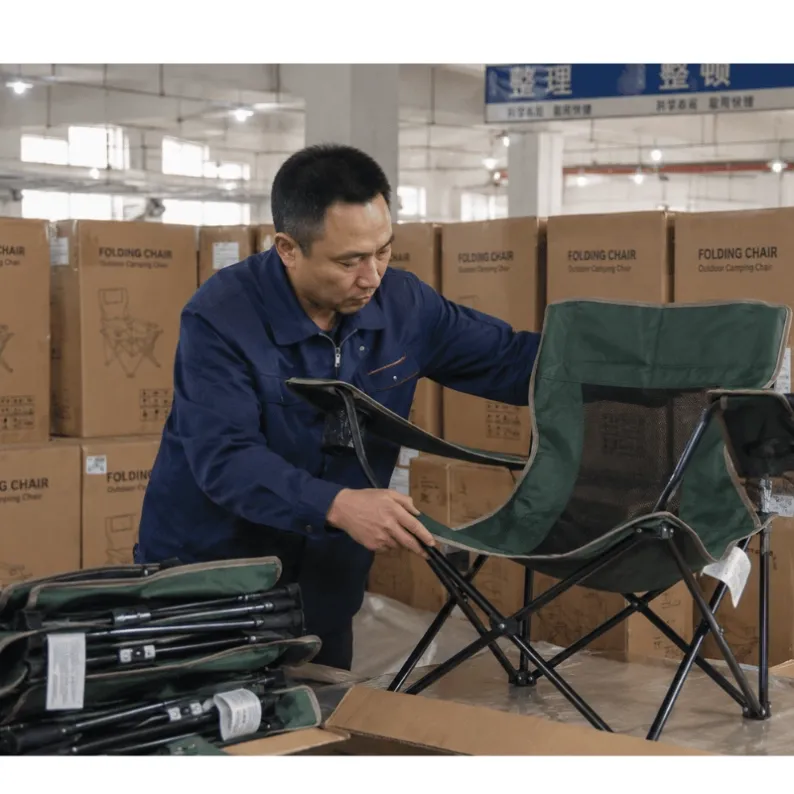
When a Camping Chair Folds Without Warning
Camping chairs are designed to do one simple job.
Open them, sit down and trust they'll stay in place.
That's why a recent product safety case caught our attention.
The chair looked exactly as customers would expect. The frame appeared sturdy, the fabric was properly fitted and the product folded neatly into its carry bag.
The problem only became obvious when someone actually used it.
Instead of remaining locked in position, the chair could unexpectedly fold while occupied.
Fortunately, not every customer experienced the problem. But it only takes a few failures before complaints begin appearing online.
For an importer, that's where the real cost starts.
Returns, replacements and damaged customer confidence usually cost far more than fixing the problem before shipment.
Why Did This Happen?
Folding products depend on more than appearance.
The locking mechanism, rivets, hinges and frame geometry all need to work together.
If one component is slightly out of tolerance, poorly assembled or not fully tested, the chair may still look perfect during a visual inspection.
The weakness only becomes obvious when someone sits down, shifts their weight or stands up.
That's why structural problems often escape basic product checks.
Everything looks normal—until the product is actually used.
What Should Be Checked Before Shipment?
For folding furniture, visual inspection is only the starting point.
Inspectors should also perform practical function checks that reflect how customers will use the product.
These typically include:
- Opening and closing the chair repeatedly.
- Checking that all locking points engage correctly.
- Confirming the frame opens evenly.
- Inspecting rivets, hinges and welds.
- Looking for frame distortion or loose connections.
- Verifying fabric tension and attachment.
- Checking packaging and accessories.
- Random AQL sampling from different cartons.
If the product relies on a locking mechanism, every sampled chair should be opened, closed and tested—not simply inspected while folded.
What Importers Can Learn From This Case
A camping chair doesn't need complicated electronics to become a quality problem.
Sometimes a small mechanical detail creates the biggest customer complaints.
That's why it's worth thinking beyond colour, printing and packaging.
Ask how the product will actually be used.
Will customers sit down quickly?
Will they lean backwards?
Will they use the chair on uneven ground?
Inspection should answer those questions before your customers do.
Final Thoughts
Products designed for everyday use should perform exactly as customers expect.
When they don't, the damage often goes beyond a single defective item.
Finding structural problems before shipment gives importers an opportunity to correct them while the goods are still at the factory.
That's almost always easier—and far less expensive—than dealing with complaints after the products arrive in the market.