
Jul 4, 2026Common Quality Issues
Ultra-Light Down Jacket Feather Leakage Issue: When Fine Down Fibers Appear on the Fabric
An ultra-light down jacket case showing how fine down fibers on dark fabric led to further fabric down-proof testing before shipment.
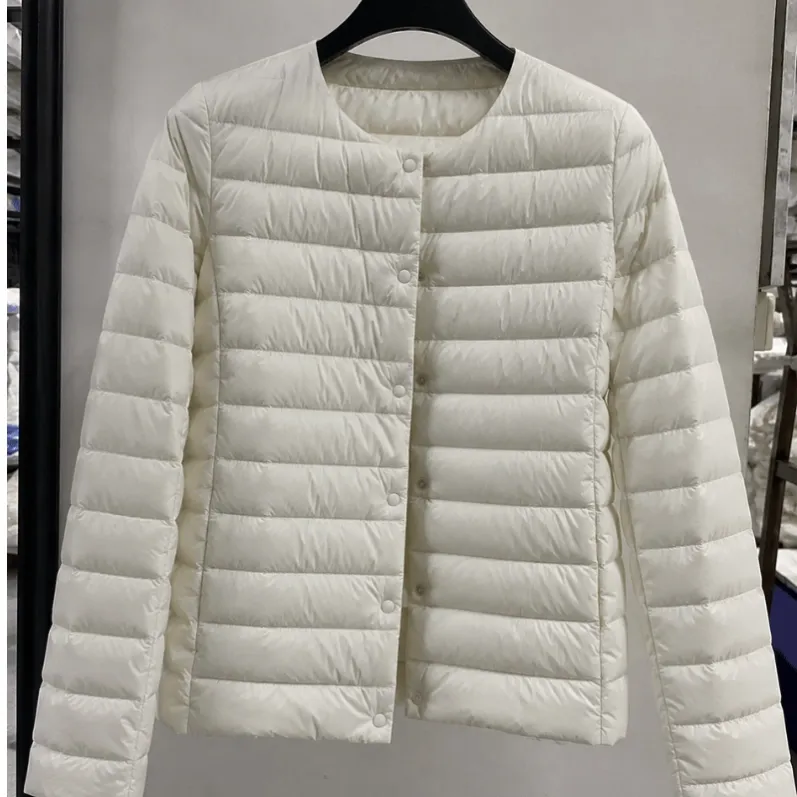
During one ultra-light down jacket inspection, we found fine down fibers on the fabric surface.
The issue was especially visible on dark-colored jackets. At first, it looked like small loose fibers on the outside of the garment. After checking more pieces, the same problem appeared again. We recorded the finding clearly in the inspection report.
After reviewing the report, the customer asked us to help send samples to SGS for a fabric down-proof test. The test result confirmed the concern: the fabric had a down leakage problem.
The First Sign Was on the Jacket Surface
The problem did not start with a torn seam or a large hole.
The jackets were taken out from the polybags and checked under normal inspection lighting. On some dark jackets, fine light-colored down fibers could be seen on the fabric surface. The fibers were small, but they were noticeable because of the color contrast.
When the surface was checked more carefully, the issue was not limited to one piece. Similar fibers appeared on several samples.
This is why the finding was not treated as simple dust or loose packing fiber. It was recorded as a possible feather leakage risk.
Why Dark Colors Made the Problem Easier to See
Feather leakage is sometimes difficult to judge on light-colored jackets.
If the shell fabric is beige, grey or off-white, small down fibers may not stand out. On black, navy or dark green fabric, the same fibers become much easier to notice.
In this case, the dark-colored jackets helped reveal the issue.
From our experience, dark down jackets often make leakage problems more visible during inspection. The defect may not be more serious than on light colors, but it is easier for customers to see after purchase.
That matters because customers usually judge the product by what they can see first.
Why the Finding Needed Further Testing
A pre-shipment inspection can identify visible down fibers and record where they appear.
But when the question is whether the fabric itself is down-proof, a laboratory test is more appropriate. The issue may come from fabric density, finishing, coating, needle holes or the type of filling used. These points cannot be fully confirmed by looking at the jacket surface only.
After the customer reviewed the inspection report, they decided to arrange further testing through SGS.
GD Inspection helped prepare and send the selected samples, but the formal down-proof test was performed by SGS. This distinction is important. The inspection identified a visible risk; the laboratory test confirmed the fabric performance issue.
What GD Inspection Checked on Site
During the inspection, selected jackets were taken from different cartons and opened from their polybags.
The inspector checked the fabric surface, especially on dark-colored pieces where fine down fibers were easier to see. When fibers were found, close-up photos were taken and the affected areas were described in the report.
The inspector also compared more than one sample to see whether the issue appeared repeatedly or only on a single jacket.
This matters because one loose fiber may not prove a batch problem. Repeated fibers on several pieces suggest the buyer should pay closer attention before shipment.
Why This Issue Matters for Importers
Ultra-light down jackets are expected to be light, soft and clean.
If fine down fibers appear on the surface before the goods are even shipped, customers may see more leakage after wearing, folding or packing the jacket. This is especially true for thin shell fabrics, because they are under more pressure from the filling and stitching.
For an importer, the complaint may sound simple: “the jacket is shedding” or “white fibers keep coming out.” But behind that complaint, the cause may be a fabric performance issue that cannot be solved by brushing the surface.
In this case, the later SGS test gave the customer a clearer basis for discussion with the supplier.
What Could Be Decided Before Shipment
Because the issue was found before shipment, the customer still had options.
They could review the SGS result, discuss the fabric problem with the factory, decide whether the affected goods should be held, and ask the supplier to explain the cause. If needed, they could also compare the result with the approved fabric requirement or previous production standard.
This is the value of recording small but repeated findings clearly during inspection.
The visible fibers on the jacket surface were not ignored as a minor appearance issue. They led to a proper fabric down-proof test, and the test confirmed that the concern was real.
Finding fine down fibers before shipment gave the customer time to verify the risk before the jackets entered the market.