
Jul 5, 2026Client Stories & Case Studies
The Zipper Worked But the Sleeping Bag Still Failed Inspection
A sleeping bag inspection case showing how a zipper could operate normally while the zipper seam attachment still failed before shipment.
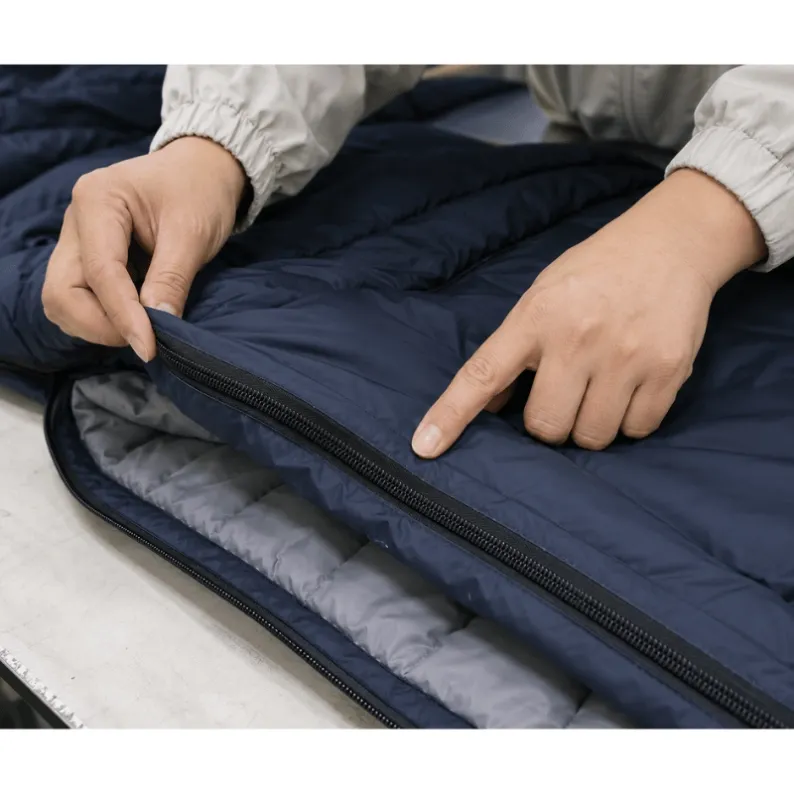
During one sleeping bag inspection, the zipper passed the first check.
Our QC opened and closed it from end to end. The slider moved. The teeth engaged. There was no obvious jamming during the first operation.
The problem appeared a few minutes later, when the inspector checked the stitching along the zipper tape. Part of the seam beside the zipper started opening. The zipper itself could still move, but the way it was attached to the sleeping bag was not strong enough.
The First Check Did Not Show the Real Problem
The inspector first operated the zipper the same way a customer would: open the sleeping bag, close it again, then check whether the slider moved smoothly along the full length.
That part passed.
Then the inspector checked the zipper attachment area by hand. The stitching beside the zipper tape was pulled and examined along the side seam. Near one section, the seam was already weak. After light handling, the stitches started to separate and the fabric edge opened.
This changed the finding. It was not a zipper function issue. It was a sewing and attachment issue around the zipper.
The Weak Point Was Next to the Zipper Tape
The failed area was not in the middle of the sleeping bag.
It was along the long zipper seam, where the zipper tape was stitched to the shell fabric and lining. That area takes repeated stress when the user gets in and out of the sleeping bag, pulls the zipper closed, or opens the bag fully like a blanket.
If the stitch margin is too narrow, the thread tension is poor, or the fabric edge is not held firmly, the seam can open even while the zipper still runs.
That was the risk in this case. A normal zipper operation check was not enough to catch it.
Why the Factory Missed It
The factory had checked whether the zipper could open and close.
That is a common production check. A worker pulls the slider, sees that the zipper runs, and moves to the next piece. For many products, that quick check catches obvious zipper problems.
But this sleeping bag had a different weakness. The zipper was not the part failing. The seam beside it was.
This can happen when the sewing operator follows the approved sample but does not control the seam allowance consistently during bulk production. It can also happen when thick filling makes the zipper area harder to feed smoothly through the sewing machine.
The result is a product that passes a quick zipper check but fails when the attachment area is inspected more carefully.
How QC Confirmed the Risk
The inspector did not stop after finding one weak seam.
More selected sleeping bags were opened from the sampled cartons. The zipper was operated, and the seam beside the zipper tape was checked by hand. The inspector looked for the same signs: loose stitches, narrow stitching margin, fabric slipping out from the seam, or an opening starting beside the zipper.
On the affected pieces, close-up photos were taken of the zipper seam after handling.
This was important because a photo of the whole sleeping bag would not show the problem. The report needed to show the exact seam location and the way the stitching had opened.
What Was Written in the Report
The report separated the finding from a normal zipper defect.
It did not simply say “zipper problem.” It described the issue as seam opening beside the zipper tape after checking. The photos showed the long zipper area and then the close-up of the opened stitching.
That wording mattered.
If the buyer only heard “zipper issue,” the factory might replace sliders or check whether the zipper could run. That would not solve the real problem. The factory needed to review the sewing around the zipper attachment.
A clear report helped the buyer discuss the actual defect with the factory.
How the Factory Responded
After the report was sent, the factory reviewed the affected pieces and checked the zipper sewing process.
The first response was to confirm that the zipper itself worked. That was true, but it was not the point. The failed area was the seam holding the zipper to the sleeping bag body.
The factory then had to look at the stitching margin, reinforcement at the zipper ends, and whether the fabric and lining were properly caught in the seam. For affected pieces, rework meant opening the problem area and resewing it properly, not just trimming threads.
For a sleeping bag, that kind of repair is still possible at the factory. It becomes much more difficult after shipment.
What This Case Reminds Us
A long zipper on a sleeping bag should not only be tested by moving the slider.
The inspector needs to operate the zipper, then check the seam that holds it in place. That is where real use creates stress.
This case also shows why importers should be careful with factory statements like “zipper checked, no problem.” That may be true in a narrow sense. The zipper may work. The product can still fail because the construction around it is weak.
The useful part of the inspection was that the problem was found while the goods were still in China. The buyer could ask the factory to recheck and rework the affected sleeping bags before they were packed for export.
A zipper that works once on the table is not enough; the seam holding it has to survive actual use.