
Jul 4, 2026Quality Inspection Guides
Shirt Color Shading Issue: When the Same Shirt Does Not Look the Same
Color shading in shirt orders can be hard to notice when pieces are checked one by one. Learn why comparing shirts from different cartons and sizes before shipment matters.
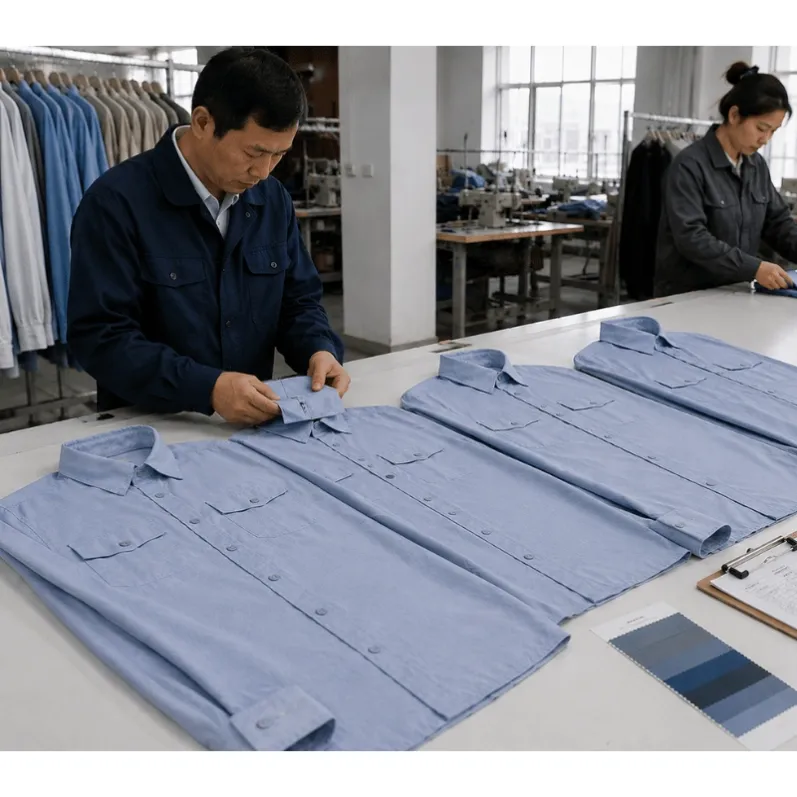
Some garment problems are not obvious when one piece is checked alone.
Color shading is one of them. A shirt may look acceptable by itself. But when several pieces are placed together, the problem becomes clear: one shirt is slightly darker, another is more yellow, and another has a different tone on the sleeve or front panel.
For importers, this is not a small detail. Once the color difference is visible, the product feels inconsistent in the store, even if the workmanship is otherwise acceptable.
The Problem Appeared Only When Pieces Were Compared
We recently came across a typical shirt order issue where the main concern was shade difference.
At first glance, the goods did not look alarming. When individual pieces were checked one by one, many looked acceptable.
The issue showed up when samples from different cartons were placed side by side. Some shirts were slightly lighter. Some had a duller tone. A few pieces even showed visible shade difference between body panels and sleeves.
This is a common situation in garment production, and we always pay attention to it during inspection.
Why Color Shading Happens in Shirt Production
Color shading can come from several production factors, but one common reason is that fabrics come from different dye lots.
In garment production, a certain level of shade difference between different fabric lots may sometimes be accepted, especially if the difference does not appear on the same garment. The problem starts when panels are mixed during cutting or sewing, or when finished shirts from different lots are packed together without proper shade sorting.
A factory may also use leftover fabric from a previous batch. Washing or finishing may not be controlled evenly. Sometimes the body fabric and sleeve fabric are close, but not close enough when viewed under natural light.
From our experience, color shading is often missed when the factory checks garments individually. The shirt passes because each piece looks “okay” on its own. The problem appears only when the order is viewed as a group.
That is also how customers see it.
A retailer may hang several shirts on the same rack. A uniform buyer may issue shirts to a team. An online customer may reorder the same color later and compare it with the first purchase. In all these situations, shade difference becomes visible.
Why Shade Difference Can Hide Between Sizes
If there is obvious color difference on one shirt, such as one sleeve looking darker than the body, it is usually easier to find. The defect is on the same garment, so the eye catches it quickly.
But sometimes the shade difference is not inside one piece. It appears between sizes or cartons.
For example, size S may come from one fabric lot, while size L or XL may come from another. Each shirt may look acceptable when checked alone. The issue only becomes clear when different sizes are placed together.
This is why, during garment inspection, we do not only check shirts one by one. We randomly pick pieces from different cartons and different sizes, then put them together for comparison and take photos. It is one of the simplest and most effective ways to identify color shading before shipment.
What Could Be Checked Before Shipment
For shirt color shading, the most useful check is simple: comparison.
Random pieces should be selected from different cartons, different sizes, and different production lots if applicable. They should be placed side by side against the approved sample under consistent lighting. The question is not whether each shirt looks acceptable alone. The question is whether the batch looks consistent together.
If the difference is visible, it should be recorded clearly with photos. The buyer can then decide whether the shade range is acceptable, whether the factory should sort the goods, or whether certain lots should be held.
For sensitive colors, a buyer may also use approved lab dips, fabric swatches, or color measurement through a qualified lab or factory system. GD Inspection can help select random samples or witness sampling, but any formal laboratory color measurement should be performed by an independent lab or qualified testing party.
The important point is that color consistency must be checked before the shirts are shipped.
A Practical Reminder for Shirt Importers
Color shading is not a rare problem. It has existed in garment production for a long time because fabric, dyeing, cutting, washing, and sewing all affect the final shade.
What makes it risky is that it can hide inside an otherwise acceptable order.
A shirt can be well sewn and still be difficult to sell if the color does not match across the batch.
Finding shade difference before shipment is much easier than explaining it after delivery.