
Jul 4, 2026Common Quality Issues
Safety Shoes Inner Lining Wrinkle Issue: Why Hand Checking Matters
A safety shoes inspection case showing how inner lining wrinkles can be missed by visual checks and why inspectors need to feel inside the shoe before shipment.
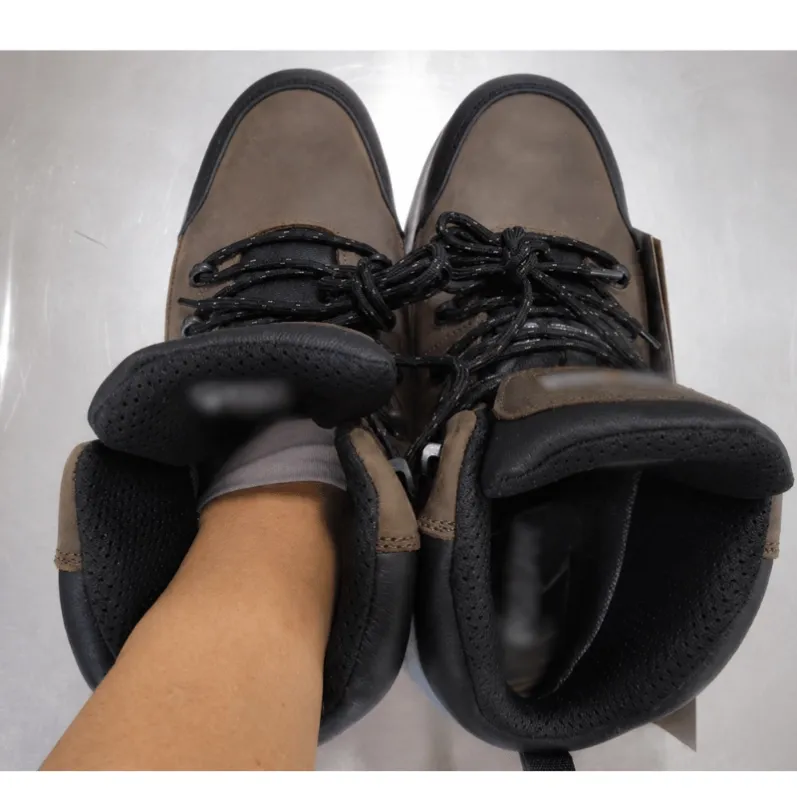
Before one safety shoes inspection, the importer gave a clear reminder: pay special attention to wrinkles inside the lining.
This was not a random concern. Inner lining wrinkles are easy to miss if the shoes are only checked from the outside. The shoe may look fine on the table, but the wearer may feel a fold, bump or hard edge as soon as the foot goes in.
For safety shoes, that matters. These are not shoes people wear for ten minutes. They may be worn through a full work shift.
The Defect Was Found by Touch, Not by Looking
During the inspection, the issue was checked in a simple way.
The inspector opened the shoe, put a hand inside, and felt around the toe area, side wall and heel area. Some pairs had uneven lining inside. The lining was not lying flat against the inner structure of the shoe. In certain areas, it felt wrinkled or folded.
This kind of defect is not always easy to photograph. The shoe opening is narrow, the inside is dark, and the wrinkle may sit deep near the toe.
But the hand can feel it immediately.
That is why, for this order, checking by touch was more useful than only looking into the shoe.
Why This Problem Is Easy to Miss at the Factory
Inner lining wrinkles often happen during lasting, lining attachment or final assembly.
If the lining is not pulled smoothly, it can fold inside the shoe. If the upper and lining are not positioned well before shaping, the wrinkle may stay trapped after the shoe is formed. Once the shoe is finished, the outside may still look normal.
Factory workers may check the appearance, outsole bonding and packing more quickly than the inside hand-feel. Unless this point is clearly included in the checking process, it can pass through production.
From our experience, inner shoe defects are often missed because they are not visible at first glance. The product needs to be handled the way the end user will use it.
For shoes, that means putting a hand inside.
What GD Inspection Would Check on Site
For this type of safety shoes order, GD Inspection would not only check the outside workmanship.
Random pairs would be selected from different cartons. Each selected pair would be opened, and the inspector would put a hand into the shoe to feel the inner lining. The check would cover the toe area, side wall, heel area and any area where the foot may rub during wearing.
If the lining feels wrinkled, folded or uneven, the finding would be recorded.
When the defect can be shown clearly, photos would be taken. When the wrinkle is difficult to capture, the report should describe the exact location, such as “inner lining wrinkle felt by hand near toe area” or “folded lining felt on inner side wall.”
This is important because some defects cannot be explained well by photos alone.
Why Different Cartons and Sizes Should Be Checked
Inner lining wrinkles may not appear on every pair.
Sometimes the issue is linked to one size. Sometimes it appears in one production batch. Sometimes only a few pairs from one carton are affected.
That is why the inspector should not only check the first pair provided by the factory.
Pairs should be picked from different cartons and, where possible, different sizes. If the same problem appears repeatedly, the buyer can ask the factory to sort more stock before shipment.
For safety shoes, this matters because checking one pair by hand is quick, but checking hundreds of pairs after arrival is slow and expensive. Each box must be opened, each shoe must be touched inside, and then the goods must be repacked.
What the Buyer Can Decide Before Shipment
Once inner lining wrinkles are found before shipment, the importer still has options.
The buyer can ask the factory to inspect the remaining goods, separate affected pairs, repair pairs that can be corrected, or replace shoes that cannot be fixed. If the problem is concentrated in one size or one carton range, the factory can focus the sorting work there first.
If the issue is found after delivery, the situation is different. The shoes may already be in the warehouse or with end users. Complaints may come as “uncomfortable,” “rubbing inside,” or “something wrong inside the shoe,” even when the outside looks fine.
That kind of complaint is hard to handle from photos.
For safety shoes, the inside of the shoe is part of the product quality. If the wearer can feel the defect, it is already a real problem.
A hand check before shipment can catch what the eye cannot see.