
Jul 4, 2026Common Quality Issues
Reflective Vest Packing Issue: When the Vest, Polybag and Carton Show Different Sizes
A reflective vest order showed different size markings on the garment, polybag and shipping carton. This case explains why packing checks matter before shipment.
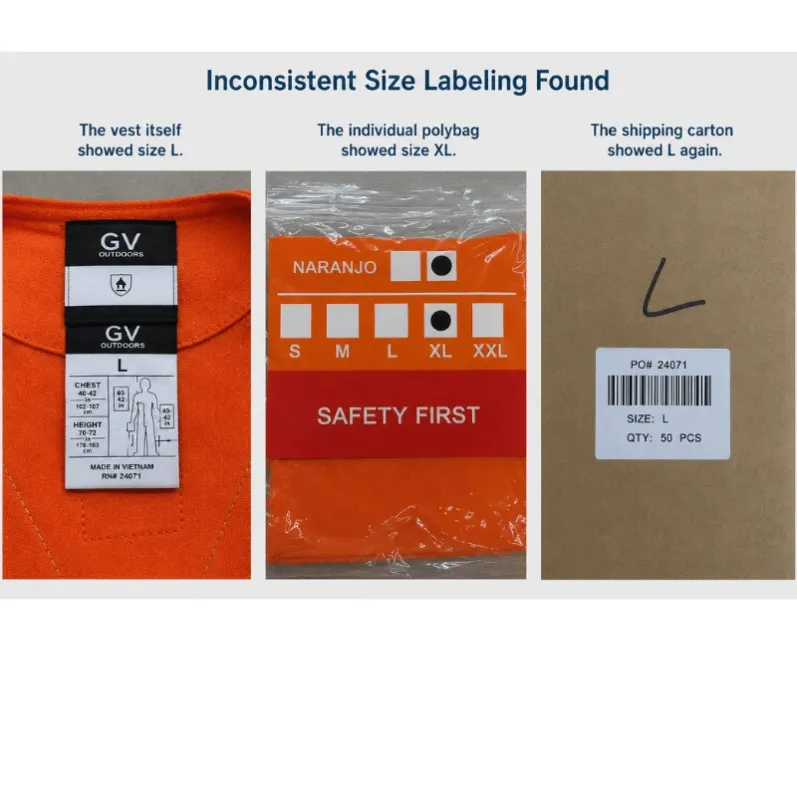
Some packing problems do not damage the product, but they still create real trouble after delivery.
In one reflective vest order, the vest itself showed size L. The individual polybag showed XL. The shipping carton showed L again.
At first glance, the vest could still look acceptable. The fabric was not torn. The reflective tape was still attached. The stitching could still pass a normal workmanship check. But the size information was already inconsistent before the goods left the factory.
For an importer, that is not a small packing detail. It can affect warehouse sorting, customer delivery and trust in the order.
The Product Was Usable, but the Packing Information Was Not
The issue was found when the packed goods were checked at different packing levels.
One sample was opened from the carton. The reflective vest inside was marked as size L. The polybag around the vest was marked XL. The outer carton was marked L.
This means the product, retail packing and shipping carton were not giving the same information.
For reflective vest orders, size markings are used throughout the supply chain. Warehouse staff use carton marks when receiving stock. Retailers use polybag labels when arranging inventory. End users look at the garment label when checking whether they received the correct size.
When those three labels do not match, the product immediately looks unreliable, even if the vest itself is the correct size.
How a Small Packing Mismatch Becomes a Larger Problem
This type of issue usually starts at the packing table.
The factory may produce several sizes in the same order. Polybags may be printed or stickered in advance. Carton marks may be applied by another team. If size materials are not cleared between batches, an XL polybag can be used for an L vest.
Sometimes the carton mark is correct because it is checked before sealing. But the individual polybag inside the carton is not checked piece by piece. That is how the outside carton can look fine while the problem remains hidden inside.
From our experience, packing issues like this are easy to miss when the check stops at the carton surface. The carton may say the right size. The goods inside may tell a different story.
That is why opening cartons matters.
What GD Inspection Would Check on Site
For this type of reflective vest order, the check does not stop at the outside carton.
During a pre-shipment inspection, GD Inspection would randomly select cartons from the finished goods area according to the inspection plan. After opening the cartons, the inspector would take out packed pieces and compare the size information on three levels: the shipping carton, the individual polybag and the vest itself.
If one vest shows L, the polybag shows XL and the carton shows L, the finding would be photographed clearly and reported to the buyer. The inspector would also continue checking other selected cartons to see whether the problem is isolated or repeated.
This kind of issue does not require complicated equipment. It requires the goods to be opened, compared and recorded carefully before shipment.
Why Random Carton Selection Matters
If the factory only presents one prepared carton, the problem may not appear.
Packing mistakes are often uneven. One carton may be correct. Another carton may contain the wrong bags. One size may be affected, while another size is fine.
This is why random carton selection matters. The checked cartons should come from different parts of the finished goods area, not only from the top of one stack. For mixed-size orders, samples should cover different sizes and carton numbers.
For reflective vests, this check is practical because the product is usually packed in individual polybags and then bulk packed into cartons. The comparison is visible and direct: carton mark, bag label and vest label should all agree.
When they do not, the buyer needs to know before shipment.
What the Buyer Can Still Decide Before Shipment
Finding this issue at the factory gives the importer more options.
The buyer can ask the factory to replace the wrong polybags, correct size stickers, re-sort affected cartons or check the remaining stock again. If only one carton is affected, the correction may be simple. If the same mismatch appears in several selected cartons, the buyer may decide to hold shipment until the factory finishes a broader recheck.
The key is that the goods are still in the factory’s control.
After shipment, the same issue becomes much harder to manage. Overseas warehouse staff may need to open cartons, check every inner bag, separate affected pieces and re-label the goods before they can be sold or distributed.
For a low-margin reflective vest order, that extra handling can cost more than the original packing correction would have.
A Practical Point for Reflective Vest Importers
Reflective vest buyers naturally pay attention to the visible product: fabric color, reflective tape position, stitching and general workmanship.
Those checks are important. But packing information also affects whether the goods can move smoothly after arrival.
A vest marked L, packed in an XL bag and shipped in an L carton creates confusion at every handover point. The factory may understand what happened. The overseas warehouse may not. The end customer certainly will not.
Before shipment, the issue can still be corrected with sorting, re-bagging or re-labeling.
Finding a packing mismatch before shipment is much easier than explaining the wrong size after delivery.