Aug 15, 2026Factory Audit & Supplier Verification
Inspection Team in China: What to Look For When Hiring
Looking for a reliable inspection team in China? Learn exactly what to check when hiring a third-party inspection agency in 2026 – 7 key criteria, red flags & tips for small importers.
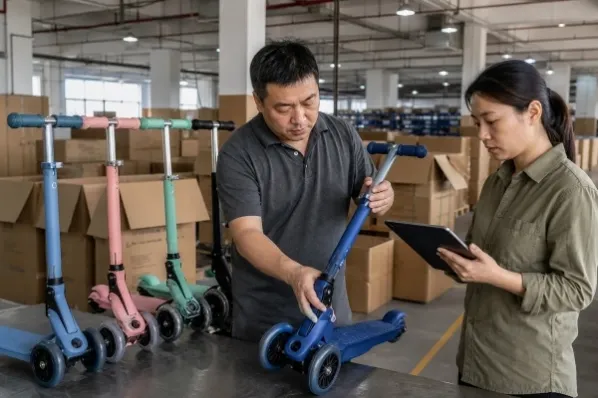
Inspection Team in China: Who Actually Handles Your Inspection?
You book a pre-shipment inspection in China. On the inspection date, one inspector arrives at the factory. It is easy to think that this person alone represents the entire service.
The visible factory visit is only one part of the work. Before the visit, someone needs to understand your purchase order, specifications, approved sample, packaging requirements, checklist, and special tests. At the factory, the inspector must turn those requirements into sampling, checks, tests, photographs, and recorded observations. Afterward, the evidence needs to become a report that you can use.
When choosing an inspection team in China, do not look only at the individual inspector's resume. Ask how the whole inspection is prepared, executed, reviewed, and supported afterward.
An Inspection Is More Than One Person Visiting a Factory
A complete inspection normally includes requirement preparation, inspection planning, on-site execution, evidence collection, report preparation, report review, and customer communication. Depending on the company's structure, these functions may be handled by one experienced person, several team members, coordinators, inspectors, or technical reviewers.
No organizational model is automatically better. The useful question is whether responsibilities are clear and effectively managed from the first request to the final clarification.
Before Inspection: Who Reviews Your Requirements?
An inspector should not arrive knowing only “Inspect 5,000 pieces of Product X.” The team may need to review your purchase order, specifications, approved sample information, artwork, labels, packaging, quantity and SKU breakdown, checklist, AQL requirements, special tests, and customer concerns.
If a requirement is unclear, it is better to identify the question before the inspector is inside the factory. For example, “Handle load test: 15 kg for 1 minute” should be communicated clearly before the visit. The inspector should not be expected to invent the test method on site.
Product Experience Helps, but It Does Not Replace Your Requirements
Relevant product experience is useful. An inspector familiar with textiles, furniture, electrical appliances, packaging, or hardgoods may recognize common processes and typical quality issues more efficiently.
However, every customer's product can have different specifications, tolerances, approved references, packaging, functions, and defect criteria. Product experience helps the inspector know where to look. Your specifications tell the inspector what to accept.
On Site: Can the Inspector Follow the Agreed Scope?
Professional execution means confirming the available quantity, selecting samples according to the agreed method, identifying relevant SKUs and variations, performing the agreed checks, conducting specified on-site tests, recording measurements, documenting defects, inspecting packaging, taking useful photographs, and recording limitations.
The inspector must follow the agreed requirements rather than replace them with personal assumptions. If you want the complete factory-visit sequence, see
What Happens During a Final Random Inspection (FRI)? A Step-by-Step Guide. This article focuses on the team's ability to execute your requirements within that process.
Good Evidence Matters More Than Strong Opinions
A professional report should not simply say “Quality is bad” or “Product looks OK.” It should be supported by defect photographs, defect quantities, measurements, test results, packaging observations, sample quantities, remarks, and limitations.
The inspector observes. The report records. You decide. The purpose of the evidence is to let you review the findings remotely and make your own commercial shipment decision.
What Happens When the Inspector Finds Something Unexpected?
Imagine the checklist requires a function test, but the factory does not have the required equipment. Or the approved sample is unavailable, one SKU is unfinished, a specification conflicts with production information, or the inspector finds a defect that was not described in the checklist.
The inspector or team should not quietly skip the point, invent a requirement, change the acceptance criteria, or make a commercial decision for you. Depending on the situation, the limitation should be documented, the responsible team member or customer contacted where appropriate, and the available evidence recorded so it is clear what was and was not checked.
Independence Means the Inspection Judgment Remains Independent
A third-party inspection provider must communicate with the factory because factory cooperation is needed for scheduling, access, sample selection, testing, locating goods, and opening cartons. That coordination does not remove independence.
The important point is that the factory should not control the inspection findings or reporting judgment. The inspector should report what was observed according to the agreed requirements and scope.
After the Factory Visit: Who Reviews the Report?
During the visit, the inspector may collect quantities, measurements, defect findings, photographs, test results, packaging information, and remarks. Before the customer receives the report, a review process can help check whether findings are understandable, quantities are consistent, photographs support the remarks, required sections are completed, and limitations are stated.
Review is another quality-control layer. It does not replace accurate on-site work and does not guarantee a perfect report, but it can help identify unclear wording or obvious inconsistencies before release.
Can the Team Explain the Report After You Receive It?
Questions after the report are normal. You may ask whether a defect was found once or repeatedly, what a photograph shows, why a test was not performed, whether a measurement came from one sample or several, or whether a packaging difference affected multiple cartons.
A useful team should refer back to inspection notes, photographs, measurements, test records, and report remarks. If something was not observed or recorded during inspection, the team should say so rather than guess.
For customers who need Spanish-language clarification after receiving an English report, see English Inspection Reports: Why Spanish-Speaking Buyers Need Clear Communication.
Communication Skills Matter, but Perfect English Is Not the Test
The goal is not perfect grammar or accent. The useful questions are whether findings are described clearly, whether the team understands your requirements, whether it asks questions when something is unclear, whether it distinguishes fact from assumption, and whether it can explain limitations and urgent findings accurately.
A technically capable inspector does not need marketing-level English. The inspection organization does need a reliable way to communicate technical information to you.
Consistency Matters When You Have Repeat Orders
For repeat orders, the inspection provider may need to retain previous requirements, known defect concerns, product specifications, approved references, recurring tests, packaging requirements, and reporting expectations.
This does not mean the same inspector must inspect every order. Availability, geography, scheduling, and product requirements may change. The important point is whether the organization can preserve relevant order knowledge between inspections.
Small Team or Large Inspection Company: Which Is Better?
Neither is automatically better. A larger organization may offer wider geographic coverage, more inspectors, broader technical resources, or standardized systems. A smaller team may offer direct communication, fewer handoffs, continuity, or flexible coordination.
These are possible characteristics, not guarantees. A small team can perform poorly, and a large company can provide excellent service. The useful question is not “How big is the company?” It is “How will my inspection actually be handled?”
Questions to Ask About the Inspection Team Before You Book
- Who reviews my inspection requirements before the visit?
- How are my specifications and checklist communicated to the inspector?
- Does the inspector have relevant experience with this product category?
- How are special tests or unusual requirements confirmed?
- What should the inspector do if a requirement cannot be checked?
- What evidence will be recorded during inspection?
- Is the report reviewed before it is sent to me?
- Who can answer questions after I receive the report?
- How are requirements from repeat orders retained?
- How is inspector independence maintained?
A Practical Example: One Inspection, Several Responsibilities
An overseas customer orders 2,500 children's scooters in three colors. Before inspection, the team reviews the model and SKU breakdown, approved color references, dimensions, assembly requirements, wheel function, folding mechanism, packaging, warning labels, and agreed on-site tests.
During the inspection, the inspector selects samples, checks workmanship, measures relevant dimensions, checks the wheels and folding mechanism, reviews packaging, and records findings and photographs.
One specified function check cannot be completed exactly as written because the required test setup is unavailable. The inspector does not invent a replacement acceptance criterion. The limitation is documented and communicated according to the inspection process.
Afterward, the report is reviewed for consistency, photographs, quantities, test records, and limitations. The customer then asks, “Was the folding issue found on one scooter or several?” The team refers back to the recorded evidence and answers based on what was actually observed.
The workflow is preparation, execution, evidence, review, and clarification. The visible inspector is important, but the result depends on how the full workflow is managed.
How GD Inspection Manages the Inspection Process
GD Inspection's working process covers confirming the order and inspection requirements, preparing the inspection scope, arranging the appropriate inspector, conducting the on-site inspection, recording photographic and test evidence, preparing and reviewing the report, and communicating with the customer when clarification is needed.
The exact checks depend on the product, information provided, and agreed scope. The aim is to keep the inspection evidence connected to your actual requirements from preparation through reporting.
If you need a finished-goods check before shipment, see the Final Random Inspection (FRI) Service. If you are comparing provider quotations and service conditions, see How to Compare Inspection Companies in China Before You Choose One.
Frequently Asked Questions
Does the same inspector need to inspect every repeat order?
No. Continuity of requirements, records, and reporting expectations may be more important than assigning exactly the same individual every time.
How important is product-specific inspection experience?
It is useful, but it does not replace clear specifications, approved references, checklists, and test requirements.
Should an inspection report be reviewed before it is sent?
A review process can help identify inconsistencies or unclear reporting. It does not replace accurate on-site work or guarantee a perfect report.
What should happen if the inspector cannot perform one of the required tests?
The limitation should be documented and communicated rather than silently skipped or replaced with an invented criterion.
Is a small inspection team better than a large inspection company?
Not automatically. Each structure may have possible strengths. The more useful question is how your inspection is prepared, executed, reviewed, and supported.
Can I ask the inspection team questions after receiving the report?
Yes, where the provider offers follow-up support. Answers should be based on the evidence collected during the inspection.