
Jul 5, 2026Client Stories & Case Studies
A Backpack Passed Inspection—Until the Shoulder Strap Was Tested
A real backpack inspection case showing how a shoulder strap design issue was found during a factory pull test before shipment.
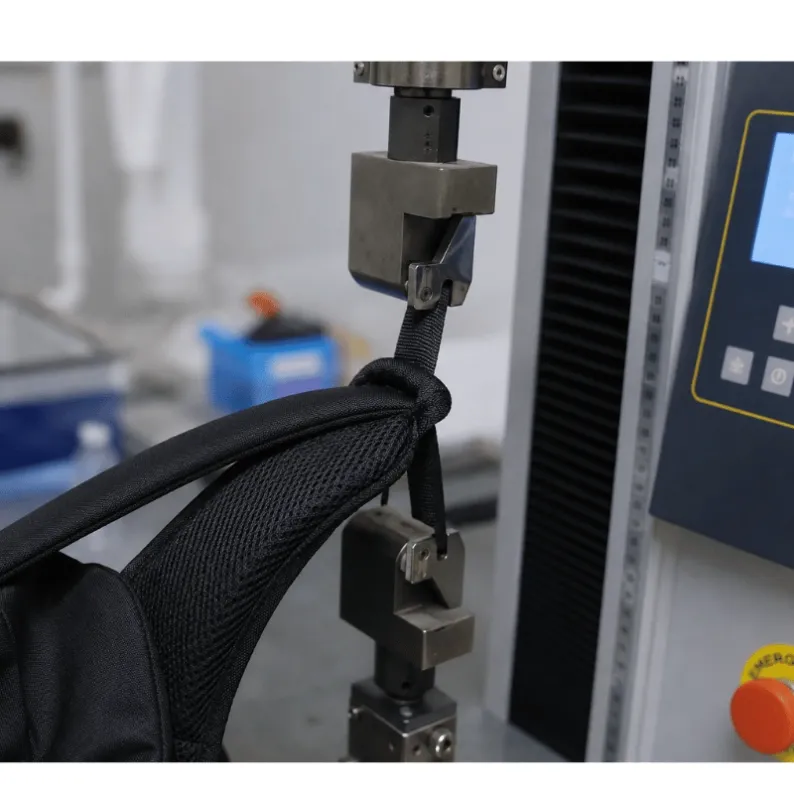
uring one backpack inspection, our QC found the problem on the factory’s pull test machine.
The backpack was selected from the finished goods. The inspector fixed the bag and tested the shoulder strap according to the normal inspection procedure. When force was applied, the strap attachment area started to break.
This was not a loose thread found by looking at the bag. It was a structural problem found during a simple strength test.
The shipment had not left China yet. That made all the difference.
The Problem Appeared During the Pull Test
The backpack looked like a finished product before testing.
The issue appeared only after the shoulder strap was placed under force. The strap connection could not hold as expected, and the attachment area showed tearing during the test.
For a backpack, this is a serious problem. The shoulder strap carries the weight of the bag when the customer uses it. If that area fails, the product cannot be used normally.
Our QC recorded the test condition and the failed area in the report. The photos showed where the strap started to break and how the problem appeared during testing.
Why This Happened
The issue was not simply “poor sewing.”
In this case, the risk came from the product design itself. The designer insisted on a certain strap construction. The factory followed the confirmed sample and produced according to that design.
This kind of situation is not rare, especially with small and medium importers or startup brands. Their teams may not yet have a full product development department, technical designer, material engineer or in-house QC person.
The factory may notice a risk during development, but once the buyer confirms the sample, the factory often continues production as approved. From the factory’s point of view, the sample was accepted, so the order can proceed.
That does not always mean the design is strong enough for real use.
How QC Found It
The problem was found because the inspection included a strap pull test.
During a normal backpack inspection, GD Inspection checks more than appearance. For load-bearing parts, our QC follows the agreed inspection procedure and performs practical tests where applicable.
For this order, the shoulder strap was tested on the factory’s pull test machine. The purpose was to check whether the strap attachment could withstand reasonable force before shipment.
When the strap started to break, the result was clear. The bag had a strength risk.
This is exactly the kind of issue that may not be found by checking only fabric, zipper, size and packing.
What Was Reported to the Buyer
The defect was recorded clearly in the inspection report.
The report did not only say “strap problem.” It showed the test method, the failed position and the visible damage after the pull test. This gave the buyer a clear basis to discuss the issue with the factory.
After receiving the report, the customer also paid special attention to the risk. The problem was no longer an opinion about whether the design looked good. It became a documented product strength issue.
That changed the conversation.
The factory and buyer could discuss the actual risk before shipment, instead of waiting for customer complaints after delivery.
How the Issue Was Handled
The customer decided to rework the goods.
That was the right decision for this type of defect. A backpack strap failure cannot be solved by cleaning, trimming thread or improving packing. The load-bearing structure needs to be corrected.
The factory had to review the strap attachment method and strengthen the affected area. Depending on the design, this could involve adding reinforcement, changing stitching, adjusting bartack position or improving the strap connection.
The important point is that the goods were still in China. Rework was still possible at the factory side.
If the same issue had been found after arrival overseas, every bag would need to be unpacked, checked, separated and possibly repaired at much higher cost.
What This Case Reminds Importers
For small and medium importers, especially new brands, product development decisions are not only about appearance.
A backpack design may look clean and modern, but the strap still needs to carry weight. If a factory raises concerns during development, it is worth listening carefully. The factory may not explain it perfectly, but sometimes their concern comes from production experience.
If there is doubt about a new structure, a sample can be tested before mass production. Importers can also ask a third-party inspection company to check samples earlier, not only at the final shipment stage.
Early testing is usually cheaper than late rework.
The Lucky Part
The lucky part of this case is simple: the customer arranged inspection before shipment.
Because the problem was found at the factory, the buyer still had options. The goods could be held, the risk could be discussed, and the backpacks could be reworked before leaving China.
A broken shoulder strap after delivery becomes a customer complaint. A broken shoulder strap before shipment becomes a problem that can still be fixed.
This time, the issue was stopped in China.