
News & Insights
2026年3月10日
How to Read Your Inspection Report (And Understand What Really Matters)
How to read your inspection report? Simple 2026 guide to understand photos, AQL results, defects & recommendations. Know when to accept, reject or negotiate – free checklist included.
Why Most Importers Feel Lost When They Open Their Inspection Report
You just received your inspection report from a third-party inspection agency. It’s full of photos, numbers, and technical terms. You stare at it and think: “Is this good or bad? Should I accept the shipment or reject it?”
You’re not alone. Most small importers struggle to understand inspection reports. This guide will teach you exactly how to read one like a pro — in simple, practical steps.
The Typical Structure of a Professional Inspection Report
A good report from a reliable inspection team follows a clear format. Here’s what you’ll usually see:
- Summary Page – Overall result (Pass / Fail / Conditional) and key highlights
- AQL Results Table – Sample size and defect counts
- Photo Section – High-resolution images with captions
- Detailed Findings – Defect list by category
Step-by-Step: How to Read Your Report in 5 Minutes
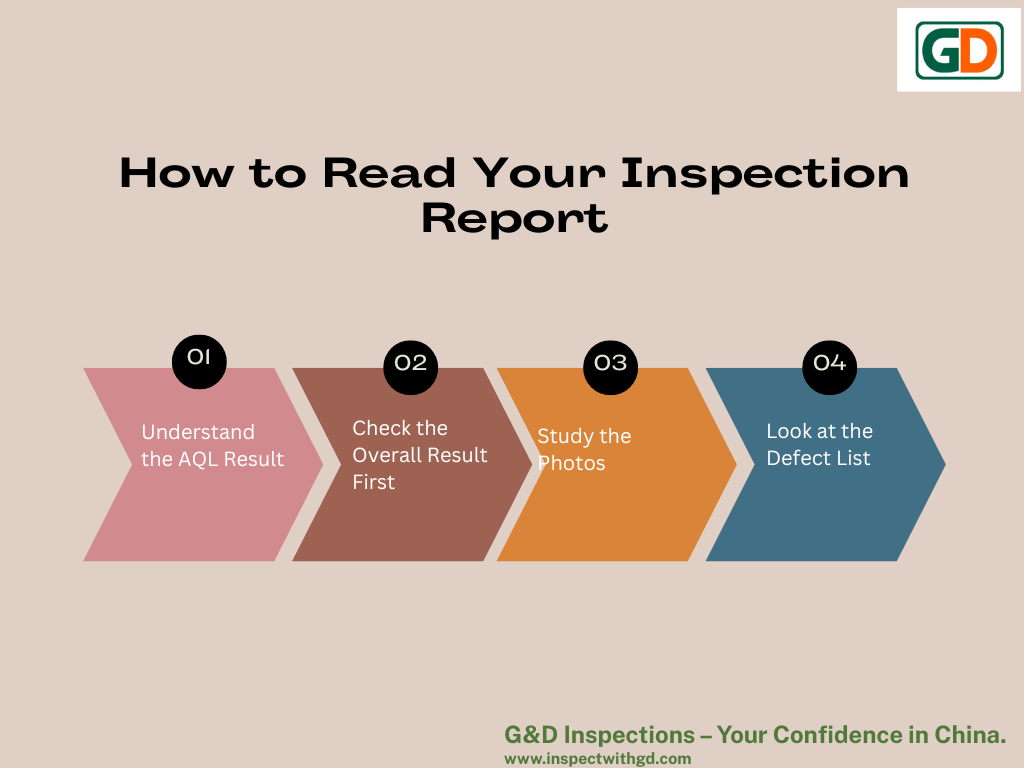
Step 1: Understand the AQL Result
Find the table that shows:
- Sample size used
- Number of defects found
- Accept / Reject numbers
Example: If it says “AQL 2.5 Major – 7/8”, it means up to 7 major defects are acceptable. If they found 8 or more, the lot fails.
Step 2: Check the Overall Result First
Look at the very first page for the big conclusion:
- Pass → Usually safe to proceed
- Conditional Pass → Minor issues, may need small fixes
- Fail → Major problems – do not release final payment yet
Step 3: Study the Photos
This is the most important part. Good reports include:
- Close-up of defects with arrows
- Comparison with your approved sample
- Overall packing and loading photos
Step 4: Look at the Defect List
Reports usually divide defects into three categories:
- Critical (red): Safety or legal issues (zero tolerance)
- Major (orange): Affects function or appearance badly
- Minor (yellow): Cosmetic only
Pay most attention to Critical and Major defects.
Free Tool: Our Inspection Report Checklist
Download our simple checklist to help you read any report faster and make better decisions.
[Button: Download Free Inspection Report Checklist]
Why Choosing the Right Inspection Team Matters
A clear, honest report comes from a dedicated inspection team. At G&D Inspections, we make sure our reports are easy to understand and include photos that actually help you decide.
FAQ: Quick Answers
What if there are many minor defects?
Minor defects are usually acceptable if under the AQL limit. Focus on major ones.
The report says “Pass” but I see some issues in photos.
Contact the inspection team immediately. Sometimes minor issues are noted but don’t affect the overall result.
How do I use the report to negotiate with my supplier?
Send the report with specific photos and ask for rework, discount, or replacement.
Ready to understand your next report with confidence?